




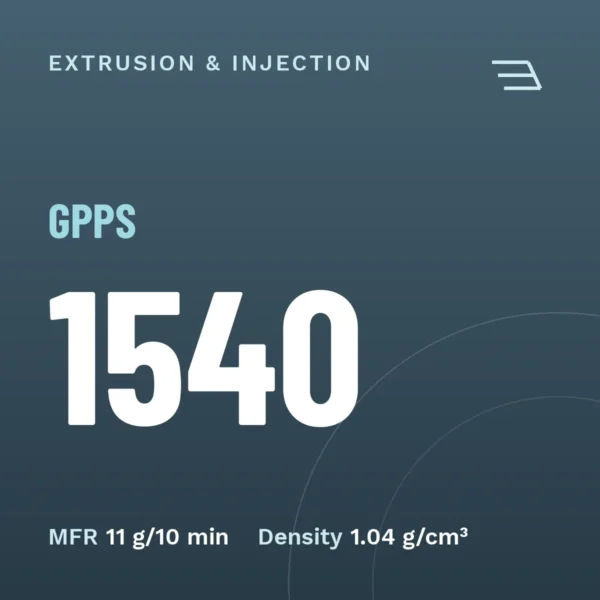
GPPS 1540 – Extrusion & Injection Grade
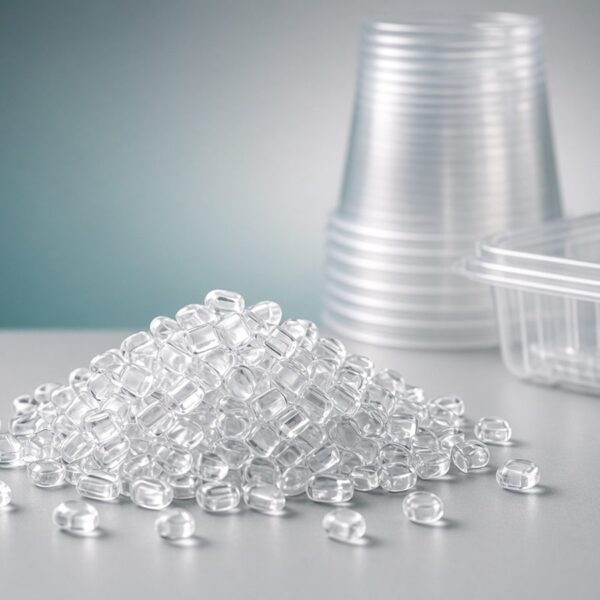
GPPS 1540 is an easy-flowing crystal polystyrene for extrusion and injection moulding.
- MFR 11 g/10 min 200 °C / 5 kg
- Density 1.04 g/cm³
- Process Extrusion / Injection
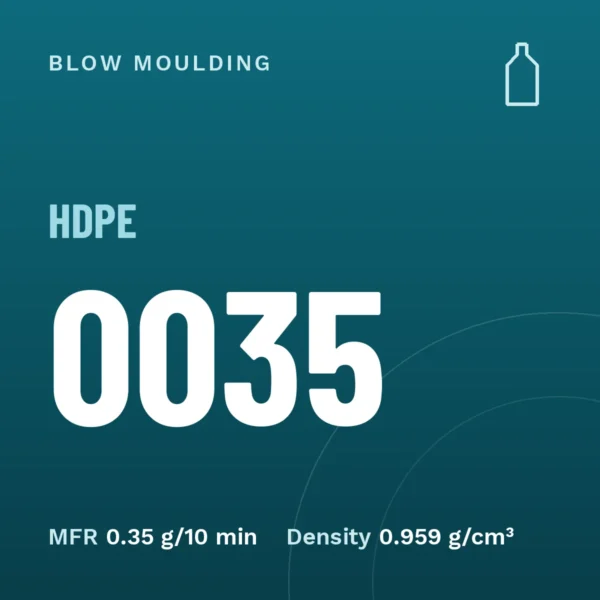
HDPE 0035 – Blow Moulding Grade
HDPE 0035 is a high-molecular-weight, highly crystalline blow moulding grade combining good extrusion behaviour with superior mechanical properties.
- MFR 0.35 g/10 min 190 °C / 2.16 kg
- Density 0.959 g/cm³
- Process Blow Moulding
HDPE 5110 – Blown Film Grade
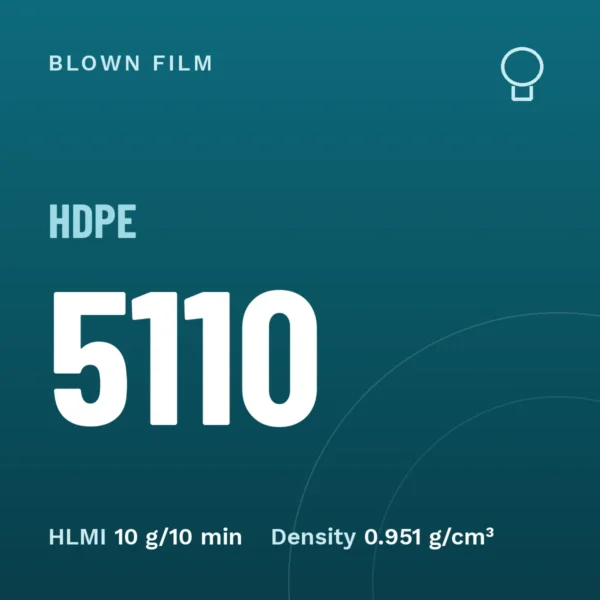
HDPE 5110 is a high-molecular-weight, high density polyethylene with broad molecular weight distribution and 1-hexene comonomer, developed for thin films with excellent strength and rigidity.
- HLMI 10 g/10 min 190 °C / 21.6 kg
- Density 0.951 g/cm³
- Process Blown Film
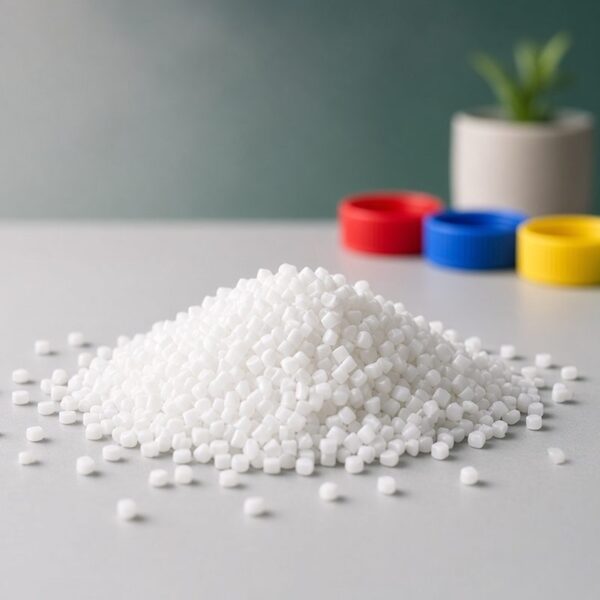
HDPE 52518 – Injection Moulding Grade
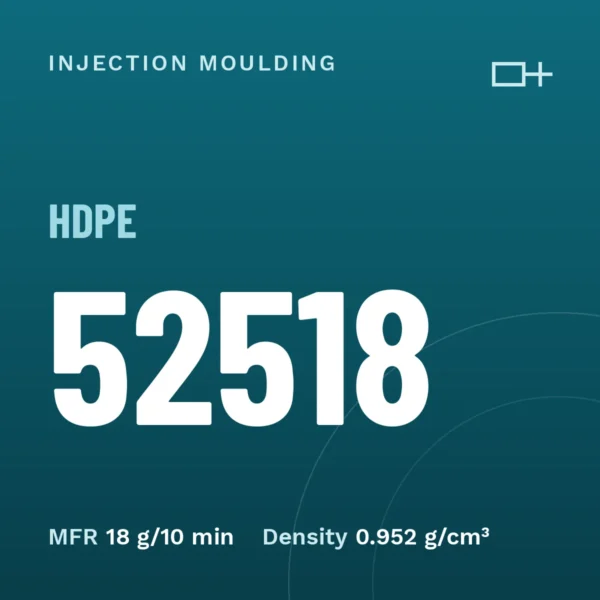
HDPE 52518 is a high-flow HDPE copolymer for injection moulding, offering a good balance between easy processing, flowability and mechanical properties.
- MFR 18 g/10 min 190 °C / 2.16 kg
- Density 0.952 g/cm³
- Process Injection
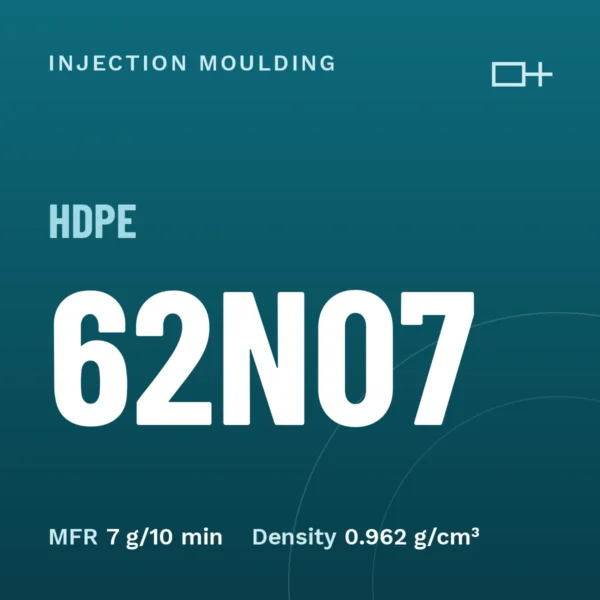
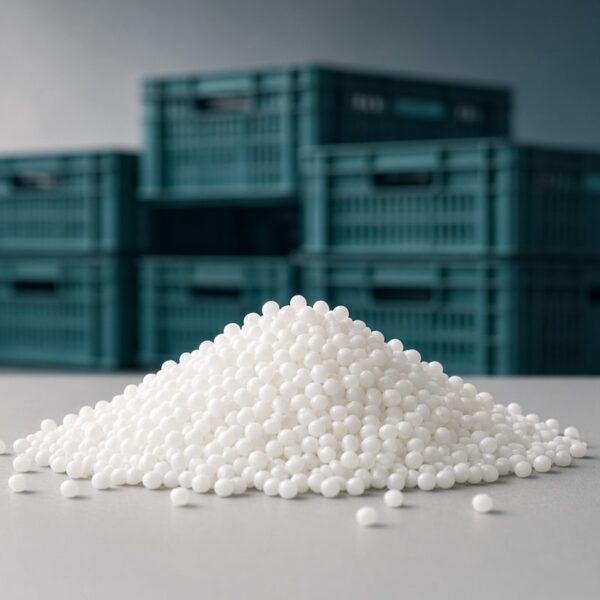
HDPE 62N07 – Injection Moulding Grade
HDPE 62N07 is an injection moulding grade with good impact strength, easy processing, high rigidity and UV resistance.
- MFR 7 g/10 min 190 °C / 2.16 kg
- Density 0.962 g/cm³
- Process Injection
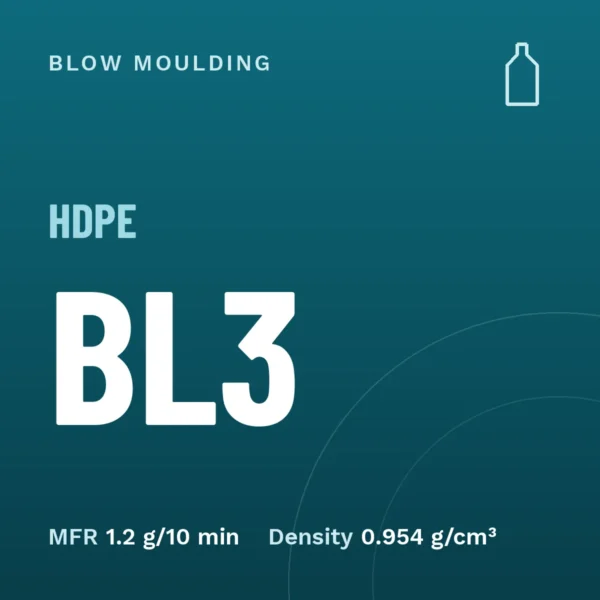
HDPE BL3 – Blow Moulding Grade
HDPE BL3 is a blow moulding grade with 1-butene comonomer for small containers up to 10 litres.
- MFR 1.2 g/10 min 190 °C / 5 kg
- Density 0.954 g/cm³
- Process Blow Moulding
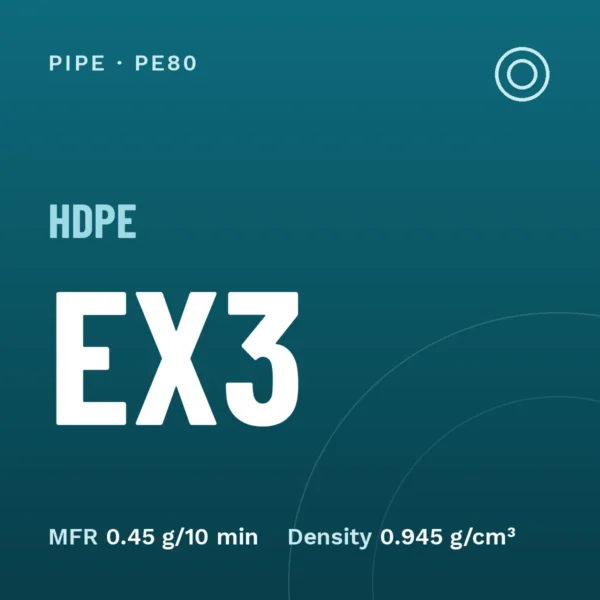
HDPE EX3 – Pipe Grade (PE80)
HDPE EX3 is a natural high density polyethylene with 1-butene comonomer, classified as PE80.
- MFR 0.45 g/10 min 190 °C / 5 kg
- Density 0.945 g/cm³
- Class PE80
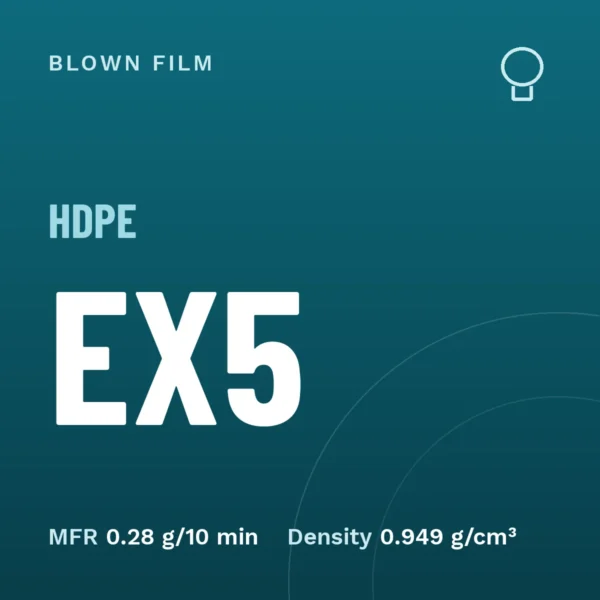
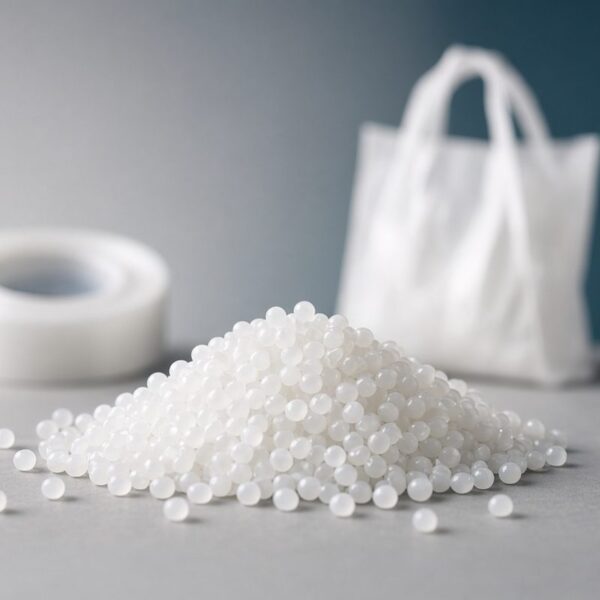
HDPE EX5 – Blown Film Grade
HDPE EX5 is a high-molecular-weight, bimodal high density polyethylene with 1-butene as comonomer.
- MFR 0.28 g/10 min 190 °C / 5 kg
- Density 0.949 g/cm³
- Process Blown Film
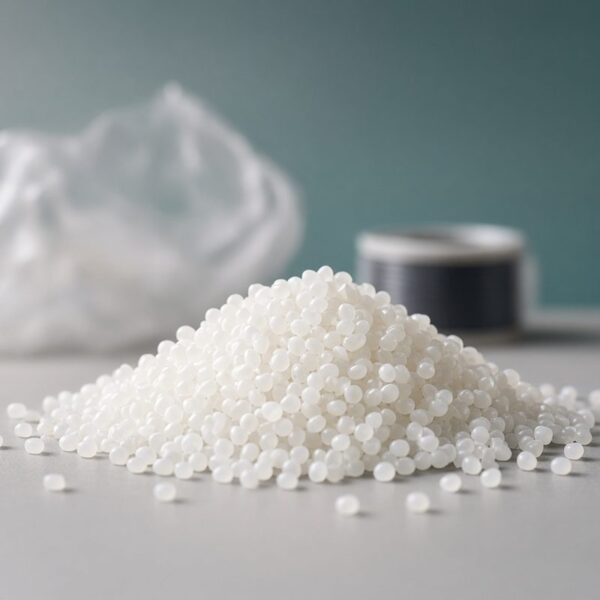
HDPE F7000 – Blown Film Grade
HDPE F7000 (7000F) is a high density polyethylene developed for very thin, high-strength films.
- MFR 0.04 g/10 min 190 °C / 2.16 kg
- Density 0.952 g/cm³
- Process Blown Film
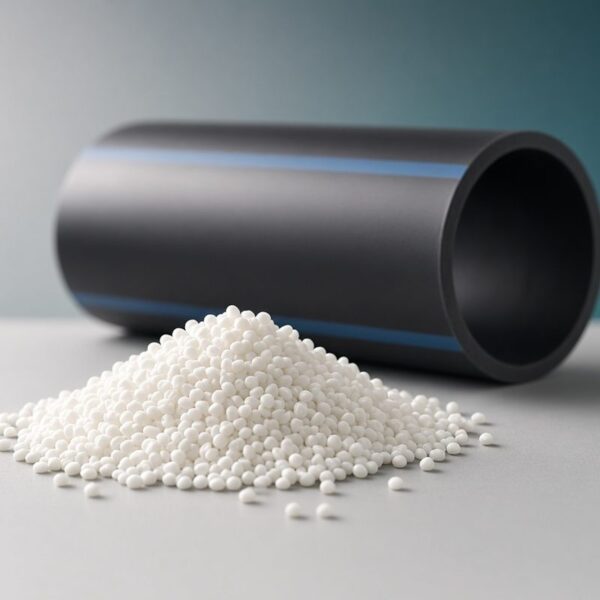
HDPE PE100 Natural – Pipe Grade (PE100)
PE100 Natural is a bimodal high density polyethylene pipe resin with 1-butene comonomer.
- MFR 0.22 g/10 min 190 °C / 5 kg
- Density 0.948 – 0.957 g/cm³
- Class PE100
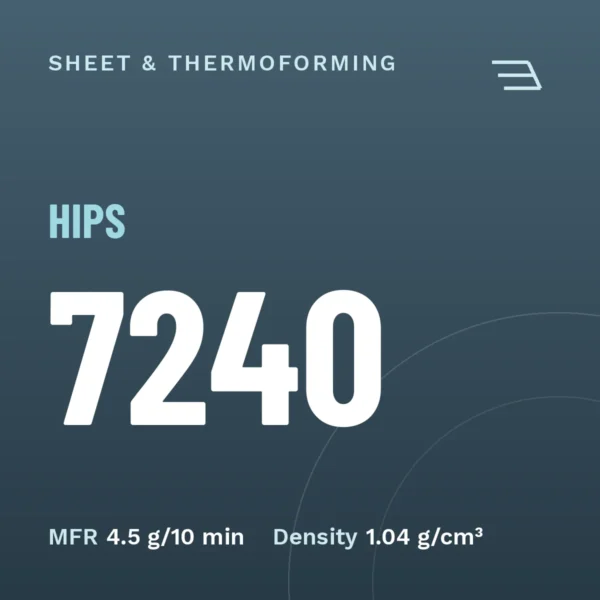
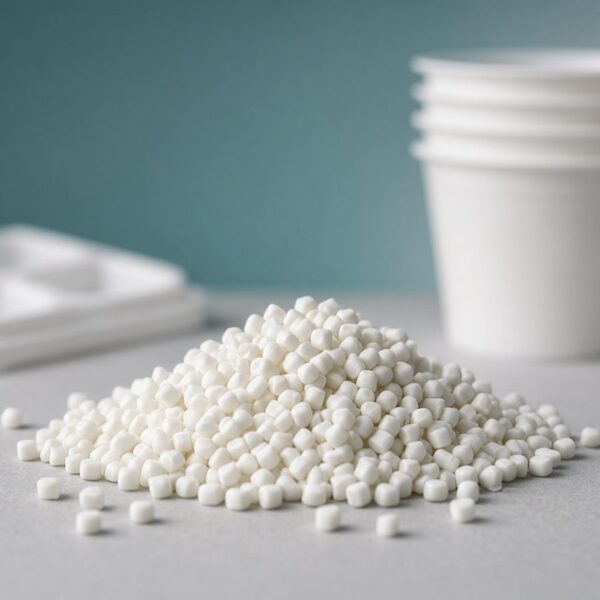
HIPS 7240 – Sheet & Thermoforming Grade
HIPS 7240 is a very high impact polystyrene for sheet extrusion and deep-draw thermoforming.
- MFR 4.5 g/10 min 200 °C / 5 kg
- Density 1.04 g/cm³
- Process Sheet Extrusion
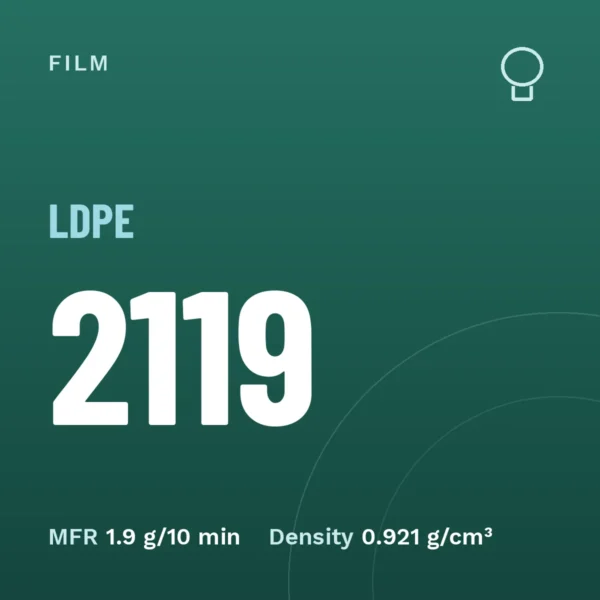
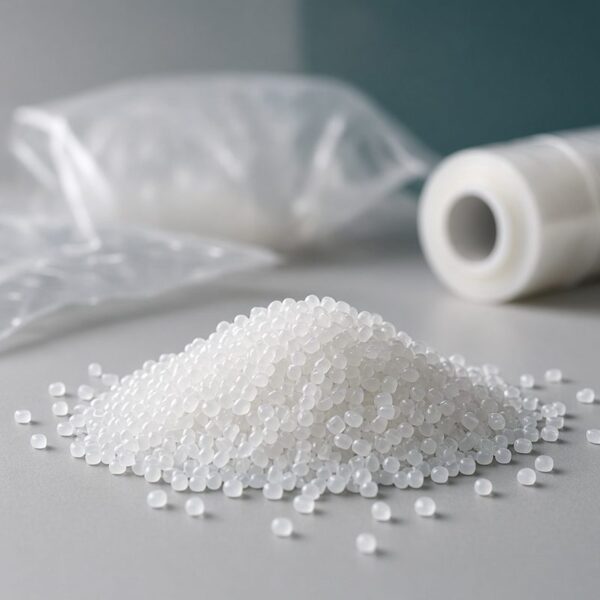
LDPE 2119 – Film Grade
LDPE 2119 is a low density polyethylene with excellent optical properties for general-purpose thin film.
- MFR 1.9 g/10 min 190 °C / 2.16 kg
- Density 0.921 g/cm³
- Process Blown Film
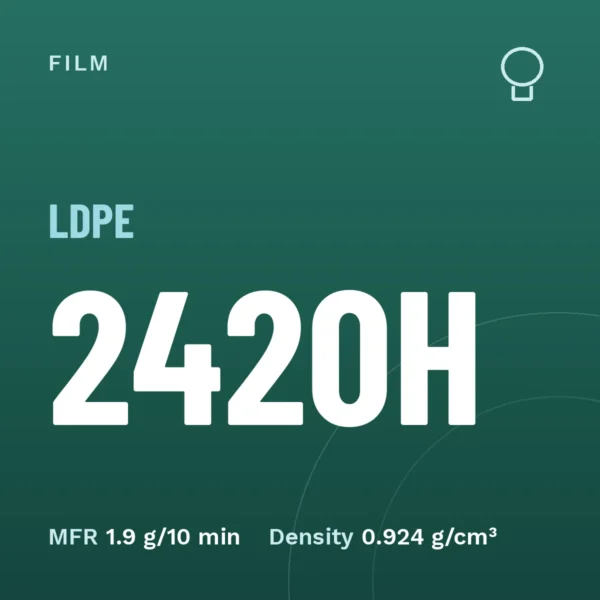
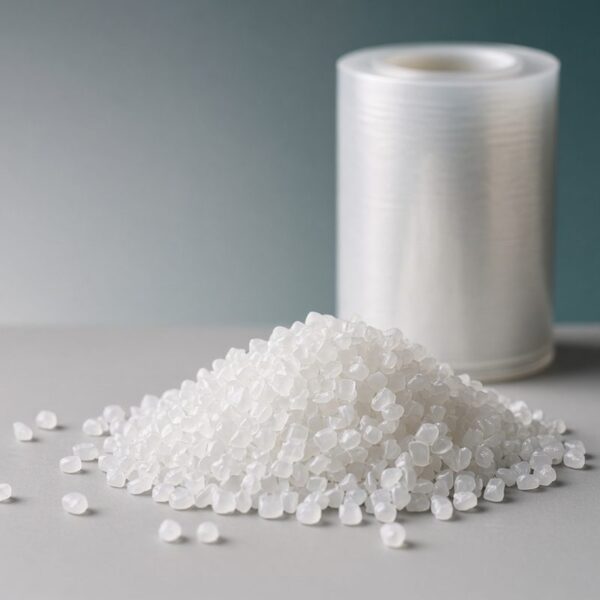
LDPE 2420H – Film Grade
LDPE 2420H is a non-additivated low density polyethylene for blown and cast film.
- MFR 1.9 g/10 min 190 °C / 2.16 kg
- Density 0.924 g/cm³
- Process Blown / Cast Film
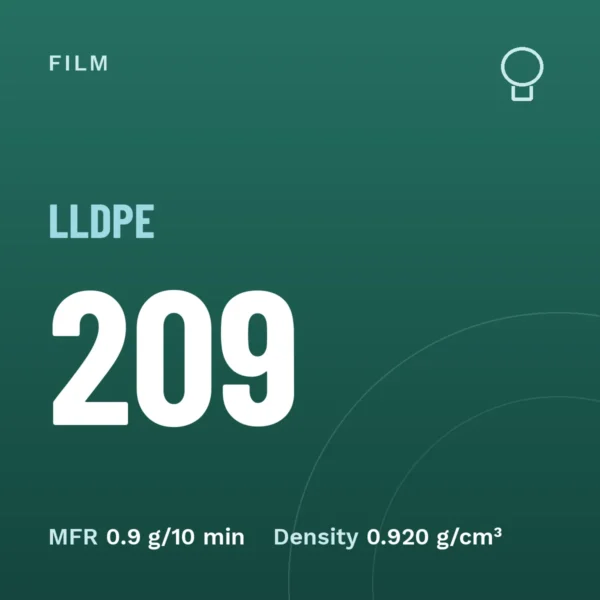
LLDPE 209 – Film Grade
LLDPE 209 is a butene-1 LLDPE copolymer with antioxidant for general-purpose film, also suitable for blending with LDPE.
- MFR 0.9 g/10 min 190 °C / 2.16 kg
- Density 0.920 g/cm³
- Process Blown Film
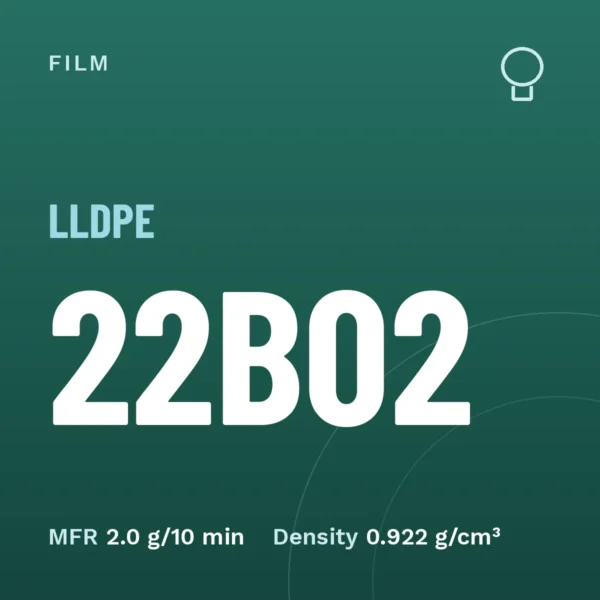
LLDPE 22B02 – Film Grade
LLDPE 22B02 is a linear low density polyethylene with 1-butene comonomer and high stiffness.
- MFR 2.0 g/10 min 190 °C / 2.16 kg
- Density 0.922 g/cm³
- Process Blown / Cast Film
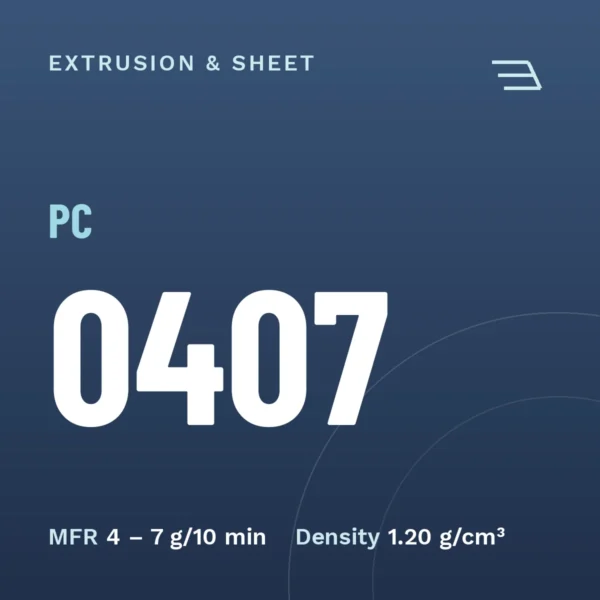
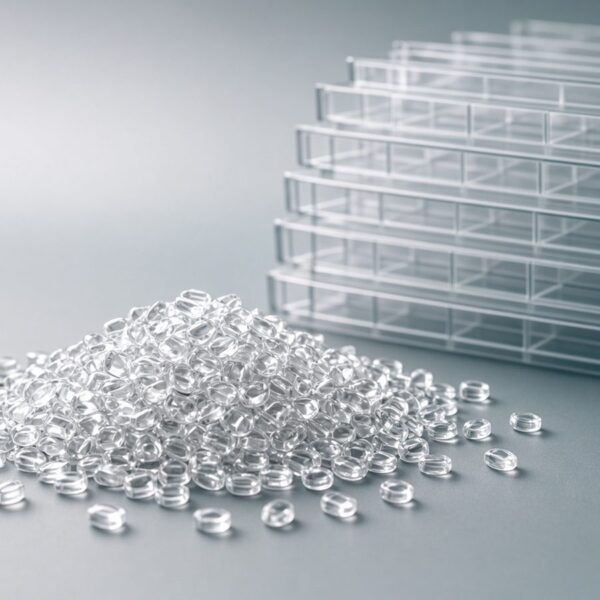
PC 0407 – Extrusion & Sheet Grade
PC 0407 is a high-viscosity polycarbonate for solid and multi-wall sheet extrusion, UV stabilised for outdoor use.
- MFR 4 – 7 g/10 min 300 °C / 1.2 kg
- Density 1.20 g/cm³
- Process Sheet Extrusion
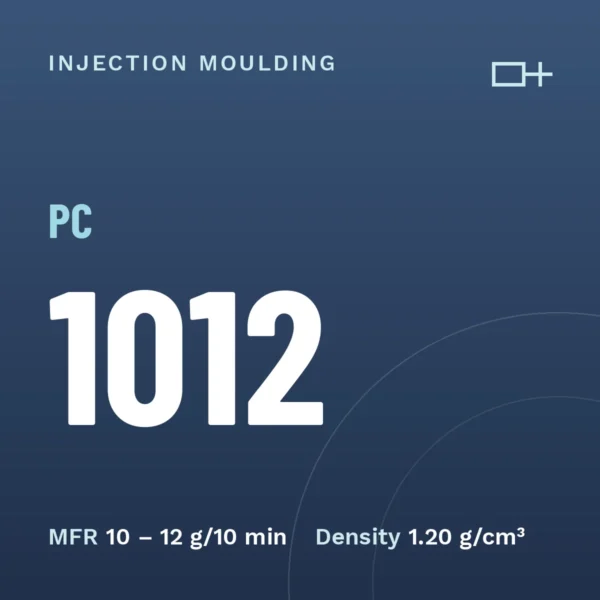
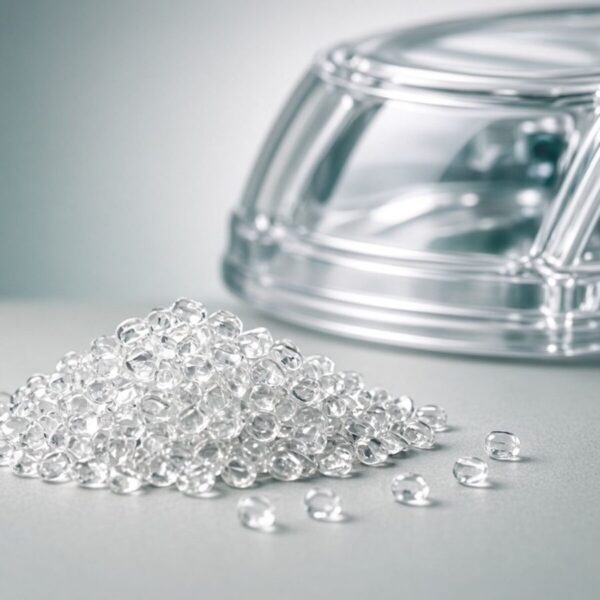
PC 1012 – Injection Moulding Grade
PC 1012 is a medium-viscosity polycarbonate for injection moulding with UV stabilisation and mould-release additives.
- MFR 10 – 12 g/10 min 300 °C / 1.2 kg
- Density 1.20 g/cm³
- Process Injection
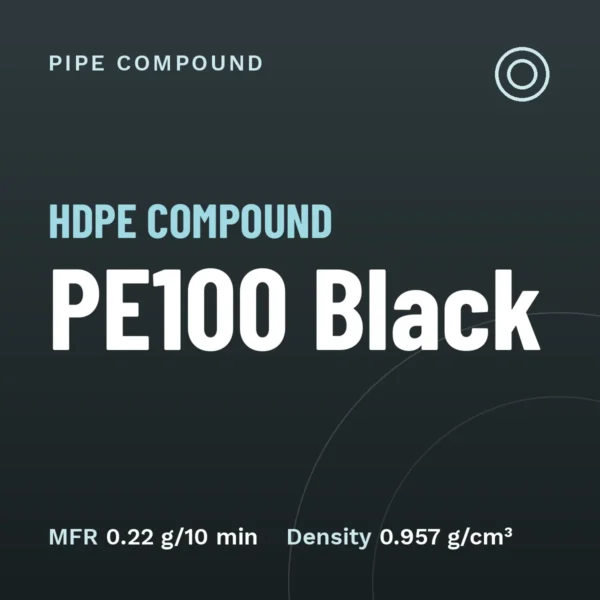
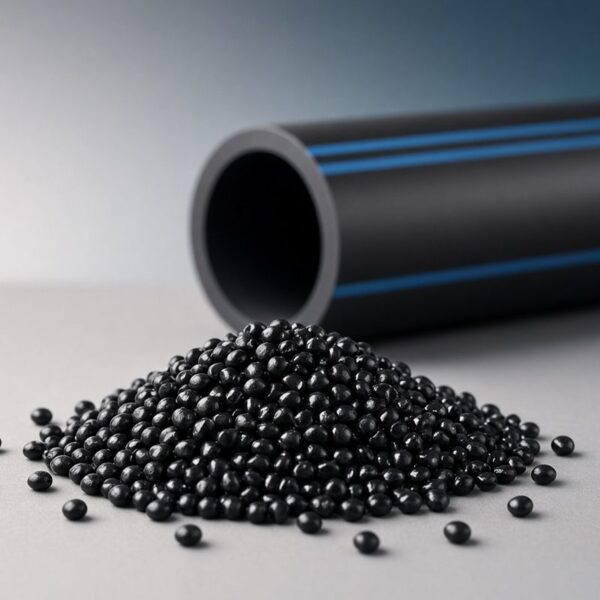
PE100 Black – HDPE Pipe Compound
PE100 Black is a bimodal high density polyethylene pipe compound with 1-butene comonomer and finely dispersed carbon black.
- MFR 0.22 g/10 min 190 °C / 5 kg
- Density 0.957 g/cm³
- MRS 10 MPa
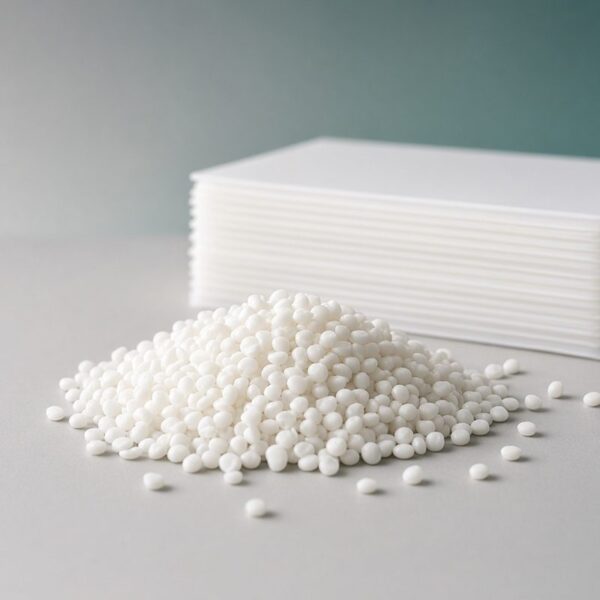
PP 440G – Sheet & Thermoforming Grade
PP 440G is a nucleated heterophasic copolymer developed for sheet extrusion, thermoforming and corrugated board.
- MFR 1.3 g/10 min 230 °C / 2.16 kg
- Density 0.90 g/cm³
- Process Sheet Extrusion
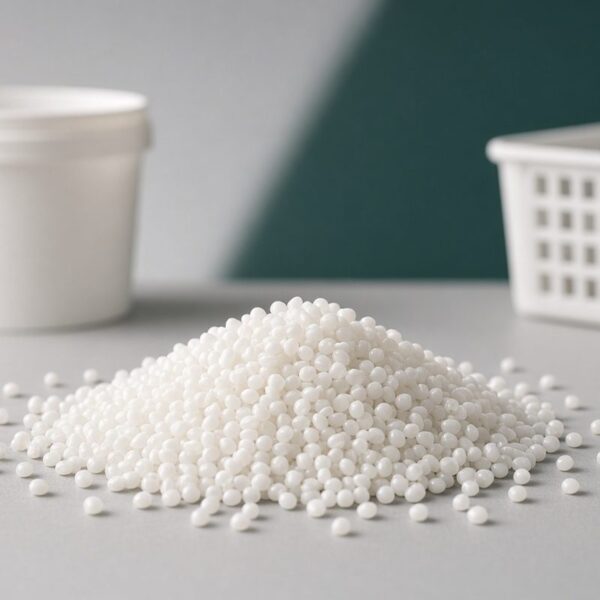
PP 440L – Injection Moulding Grade
PP 440L is a medium-flow heterophasic copolymer combining high stiffness with outstanding low-temperature impact strength.
- MFR 6 g/10 min 230 °C / 2.16 kg
- Density 0.90 g/cm³
- Process Injection
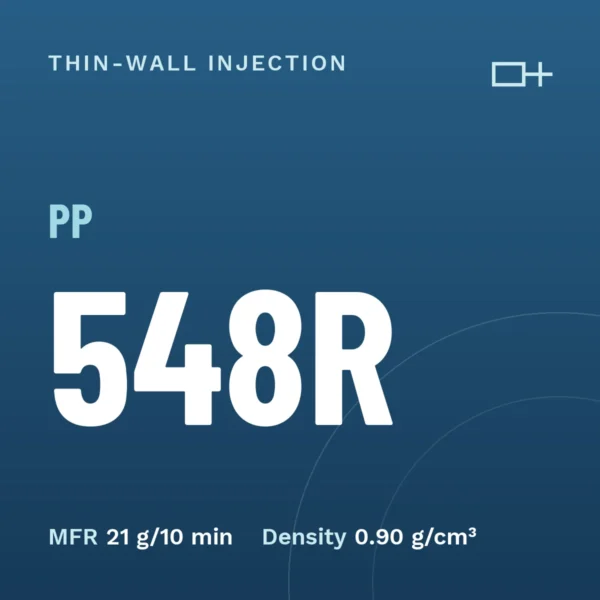
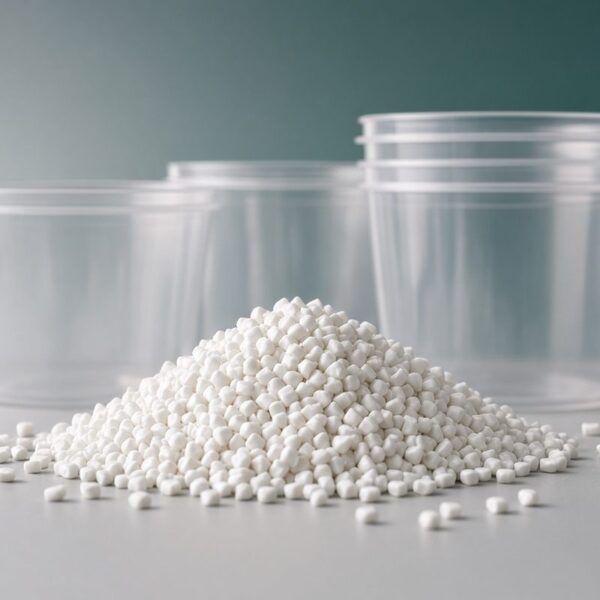
PP 548R – Thin-Wall Injection Grade
PP 548R is a nucleated, antistatic, high-fluidity heterophasic copolymer for thin-wall injection moulding.
- MFR 21 g/10 min 230 °C / 2.16 kg
- Density 0.90 g/cm³
- Process Injection
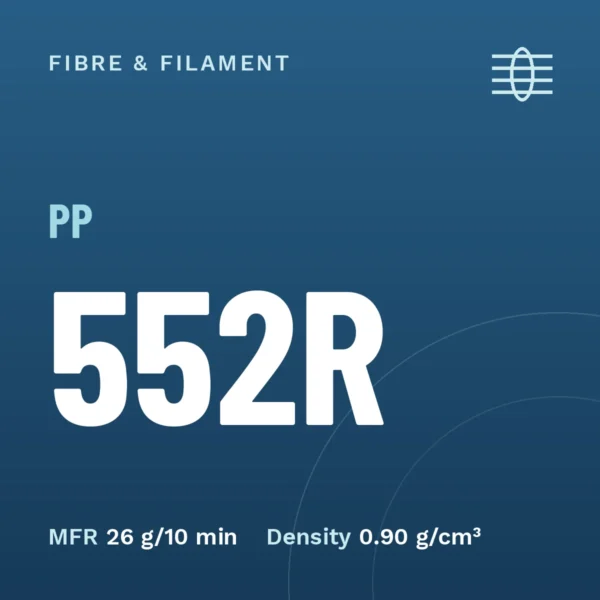
PP 552R – Fibre & Filament Grade
PP 552R is a high-melt-flow homopolymer for CF, BCF and fine-denier staple fibres, with excellent anti-gas-fading properties.
- MFR 26 g/10 min 230 °C / 2.16 kg
- Density 0.90 g/cm³
- Process Fibre
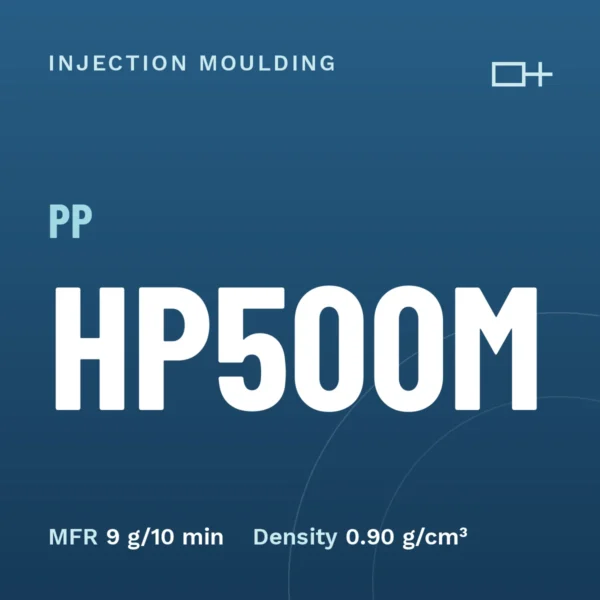
PP HP500M – Injection Moulding Grade
PP HP500M is a polypropylene homopolymer for injection moulding whose good flow gives easy processing and high-stiffness articles.
- MFR 9 g/10 min 230 °C / 2.16 kg
- Density 0.90 g/cm³
- Process Injection
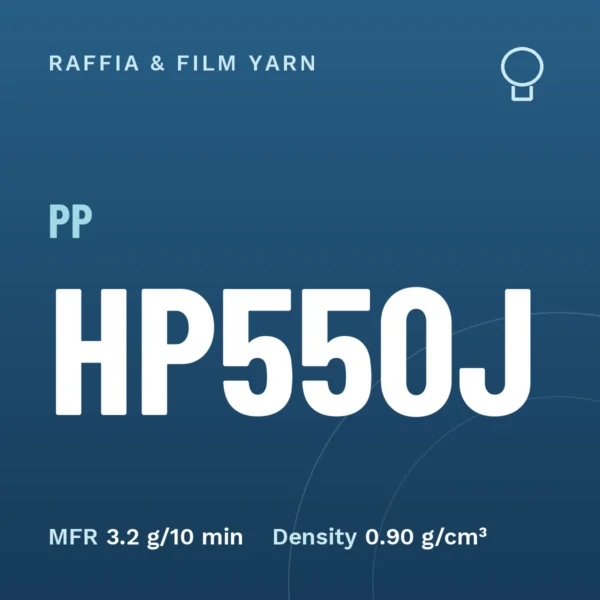
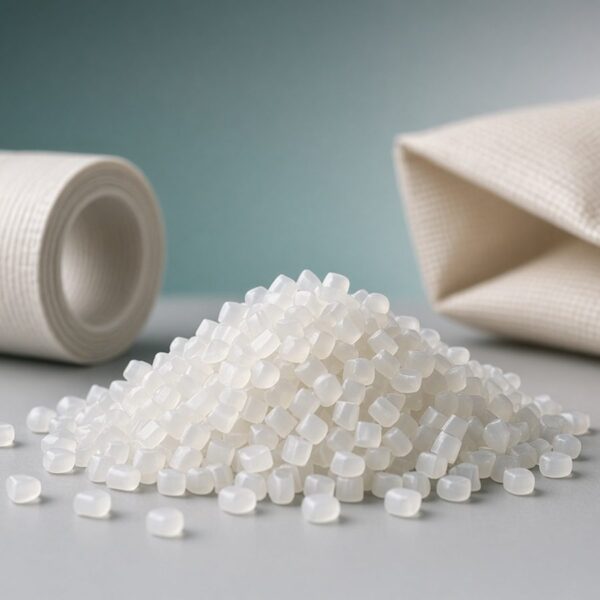
PP HP550J – Raffia & Film Yarn Grade
PP HP550J is a polypropylene homopolymer particularly suitable for film yarn (raffia), monofilament and sheet for thermoforming.
- MFR 3.2 g/10 min 230 °C / 2.16 kg
- Density 0.90 g/cm³
- Process Raffia / Tape
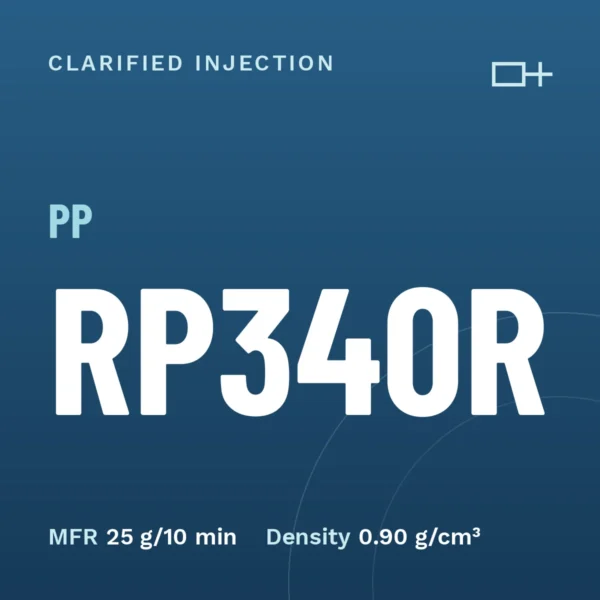
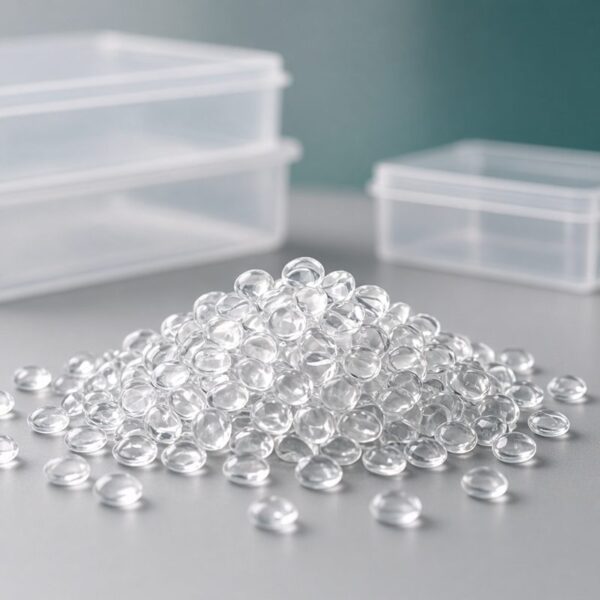
PP RP340R – Clarified Injection Grade
PP RP340R is a nucleated random copolymer with high fluidity and outstanding transparency and gloss for injection moulding and ISBM.
- MFR 25 g/10 min 230 °C / 2.16 kg
- Density 0.90 g/cm³
- Process Injection
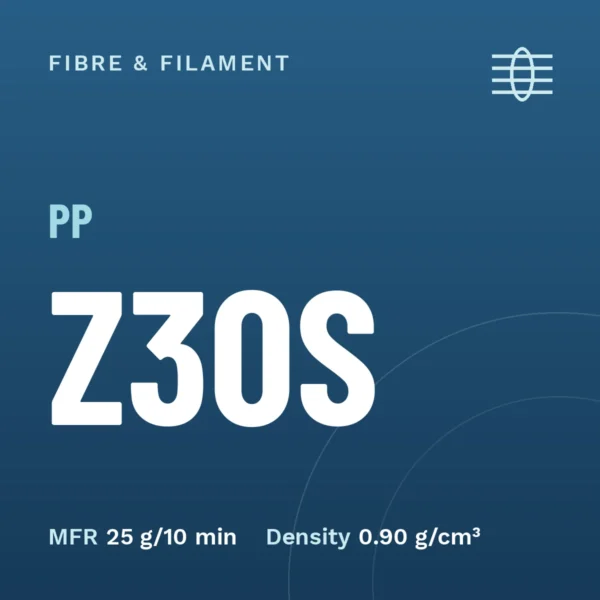
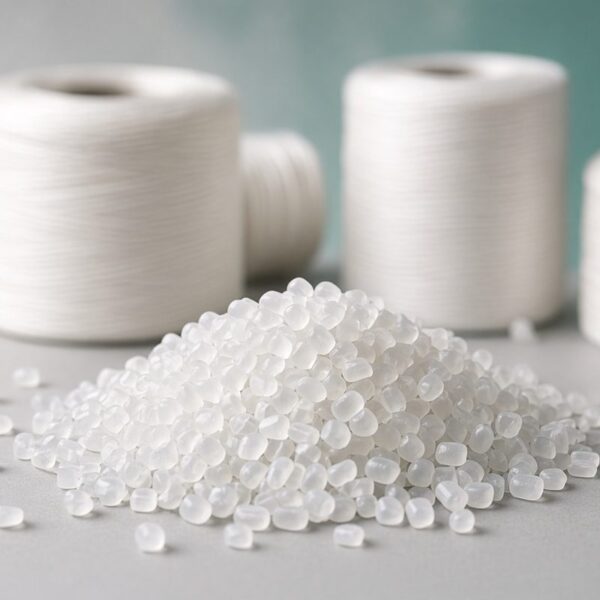
PP Z30S – Fibre & Filament Grade
PP Z30S is a high-melt-flow homopolymer for low-denier BCF, CF and staple fibres at medium to high spinning speeds.
- MFR 25 g/10 min 230 °C / 2.16 kg
- Density 0.90 g/cm³
- Process Fibre Spinning
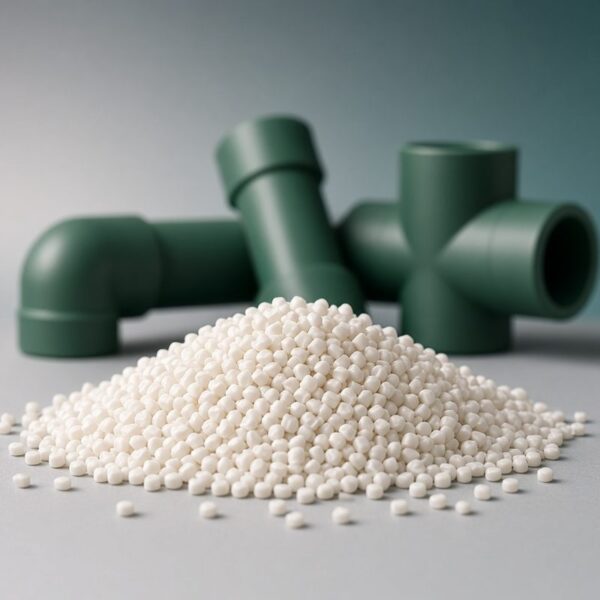
PP-R MR230C – Hot & Cold Water Pipe Grade
PP-R MR230C is a polypropylene random copolymer designed for hot and cold water supply systems and industrial water conveyance.
- MFR 0.8 – 1.3 g/10 min 230 °C / 5 kg
- Specific Gravity 0.89
- Process Pipe Extrusion
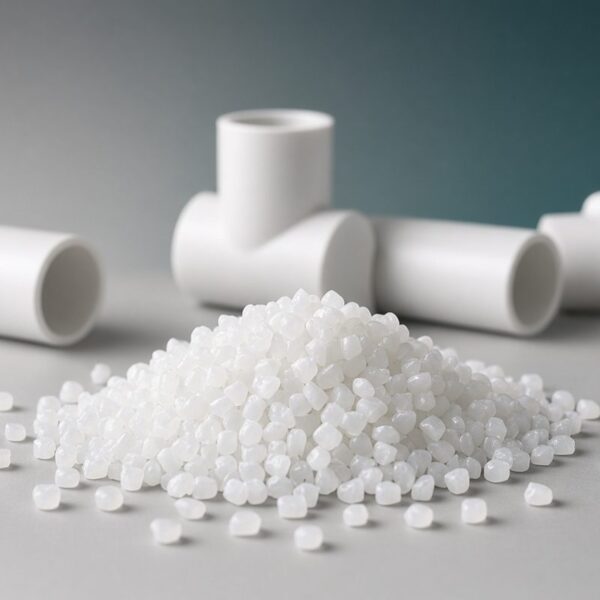
PP-R ZR230C – Pressure & Heating Pipe Grade
PP-R ZR230C is a high-molecular-weight random copolymer for pressure, heating and underfloor pipes.
- MFR 0.35 g/10 min 230 °C / 2.16 kg
- Density 0.90 g/cm³
- Process Pipe Extrusion
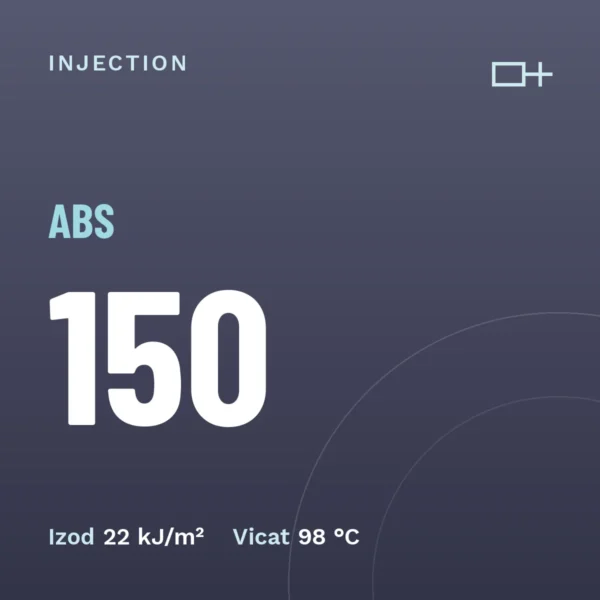
ABS 150 (SD0150) – General Purpose Injection Grade
ABS 150 (SD0150) is a general purpose injection-moulding ABS, tougher than HIPS, with low shrinkage and good dimensional stability.
- Izod 22 kJ/m² notched
- Vicat 98 °C
- Process Injection
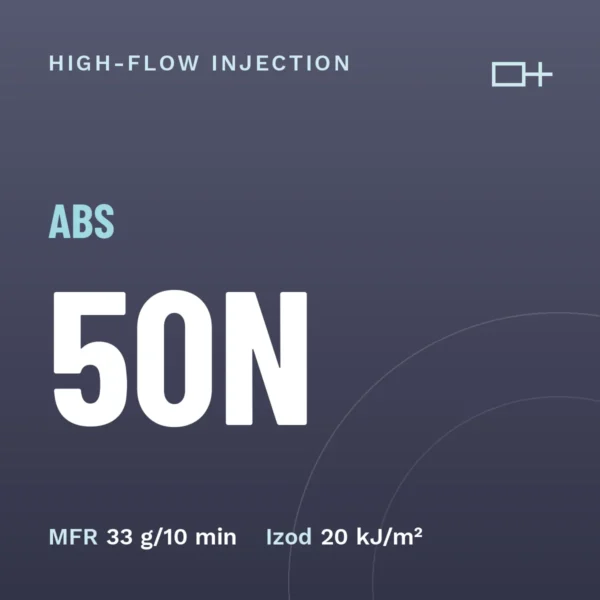
ABS 50N – High-Flow Injection Grade
ABS 50N is a general purpose, high-flow ABS with medium impact resistance for injection-moulded appliance, office and automotive parts.
- MFR 33 g/10 min 220 °C / 10 kg
- Izod 20 kJ/m² notched
- HDT 88 °C 0.45 MPa
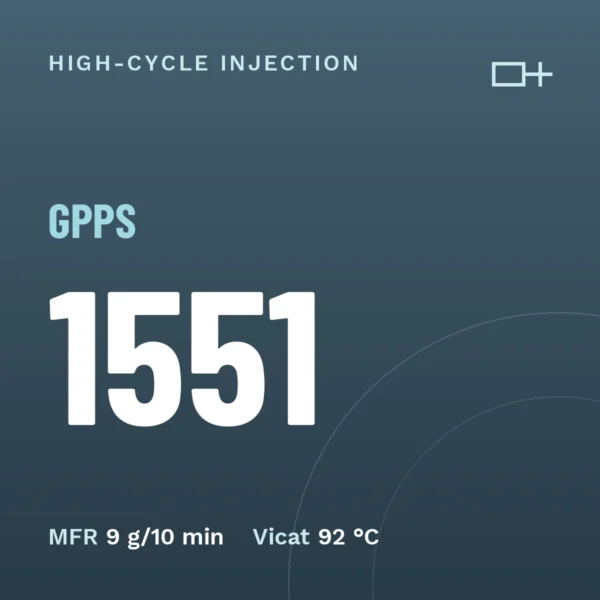
GPPS 1551 – High-Cycle Injection Grade
GPPS 1551 is a crystal-clear, high-strength general purpose polystyrene for fast-cycle injection moulding of thin-walled parts.
- MFR 9 g/10 min 200 °C / 5 kg
- Vicat 92 °C
- Process Injection
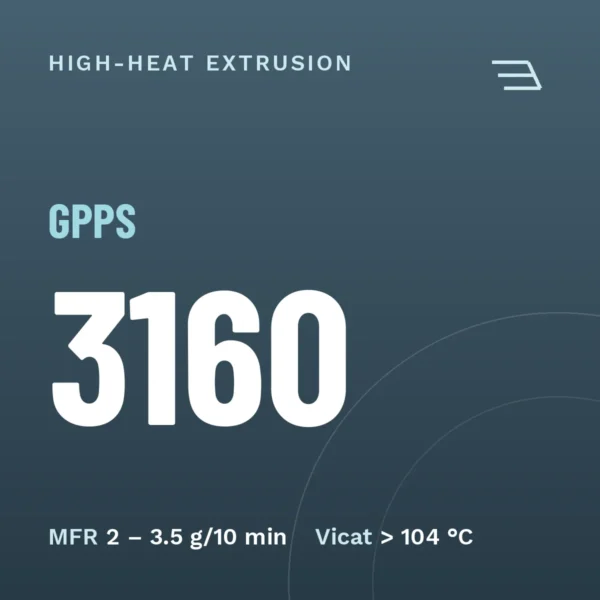
GPPS 3160 – High-Heat Extrusion Grade
GPPS 3160 is a high molecular weight, high-heat general purpose polystyrene for foam and clear sheet extrusion and medium-wall clear mouldings.
- MFR 2 – 3.5 g/10 min 200 °C / 5 kg
- Vicat > 104 °C
- Process Extrusion
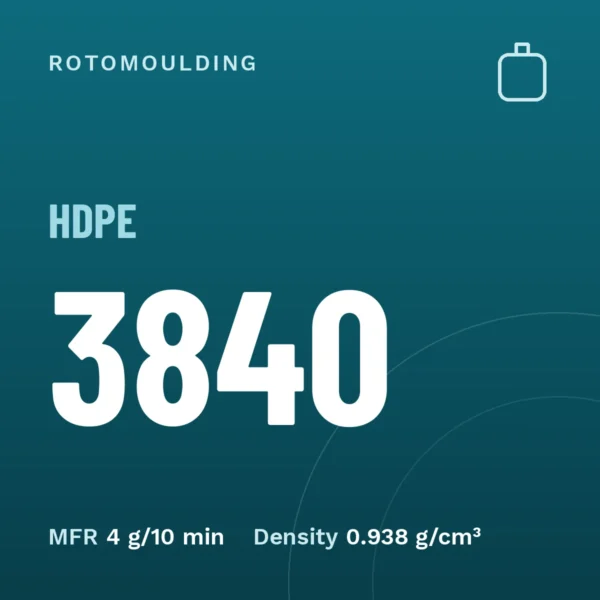
HDPE 3840 (HD3840UA) – Rotational Moulding Grade
HDPE 3840 (HD3840UA) is a UV-stabilised butene copolymer for rotational moulding of tanks and large containers.
- MFR 4 g/10 min 190 °C / 2.16 kg
- Density 0.938 g/cm³
- Process Rotomoulding
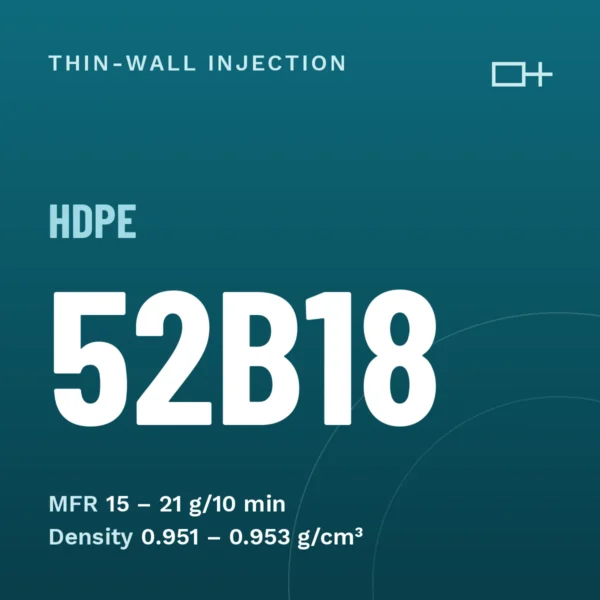
HDPE 52B18 – Thin-Wall Injection Grade
HDPE 52B18 is a butene-copolymer HDPE injection grade with easy processing, high rigidity and strength for general purpose and thin-walled containers.
- MFR 15 – 21 g/10 min 190 °C / 2.16 kg
- Density 0.951 – 0.953 g/cm³
- Process Injection
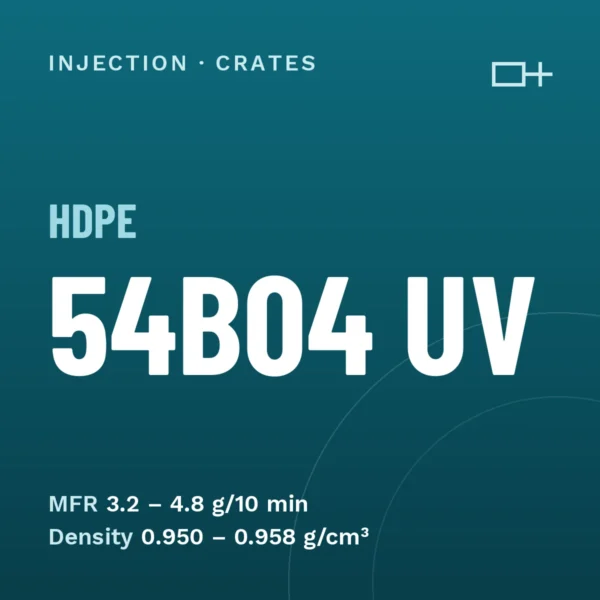
HDPE 54B04 UV – Injection Grade for Crates
HDPE 54B04 is a UV-resistant HDPE injection grade with high rigidity and easy processing for crates, pallets, seats and boxes.
- MFR 3.2 – 4.8 g/10 min 190 °C / 2.16 kg
- Density 0.950 – 0.958 g/cm³
- Additive UV
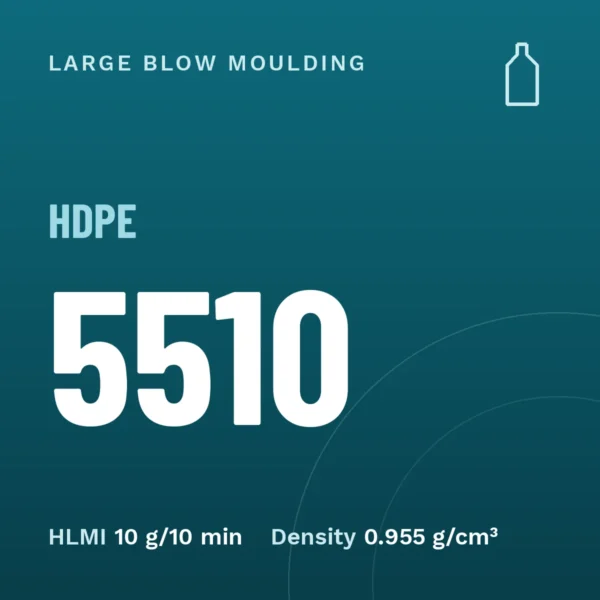
HDPE 5510 (HBM5510) – Large Blow Moulding Grade
HDPE 5510 (HBM5510) is a hexene-copolymer HDPE for large blow-moulded parts such as jerry cans and open-top drums, with high stiffness and good ESCR.
- HLMI 10 g/10 min 190 °C / 21.6 kg
- Density 0.955 g/cm³
- ESCR 90 h
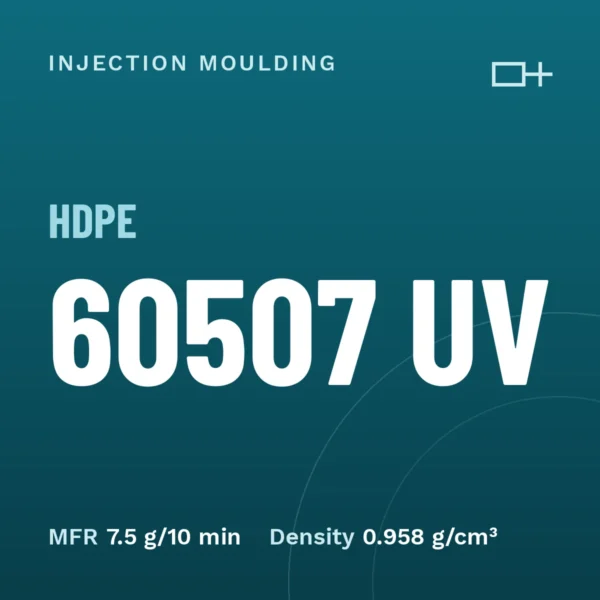
HDPE 60507 UV – Injection Moulding Grade
HDPE 60507 (HD-60507/UV) is a gas-phase HDPE homopolymer injection grade with good flow and high stiffness for crates and general purpose parts.
- MFR 7.5 g/10 min
- Density 0.958 g/cm³
- Additive UV
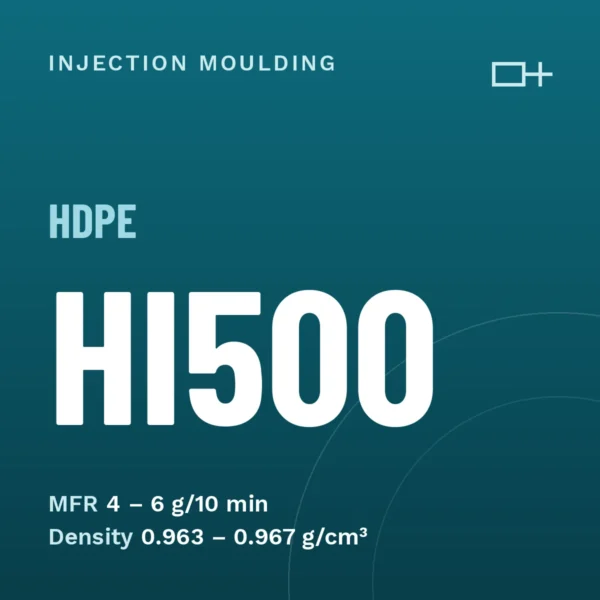
HDPE HI500 (HI0500) – Injection Moulding Grade
HDPE HI500 (HI0500) is a natural HDPE injection grade that combines high stiffness with good physical properties for crates and thick-wall parts.
- MFR 4 – 6 g/10 min 190 °C / 2.16 kg
- Density 0.963 – 0.967 g/cm³
- Process Injection
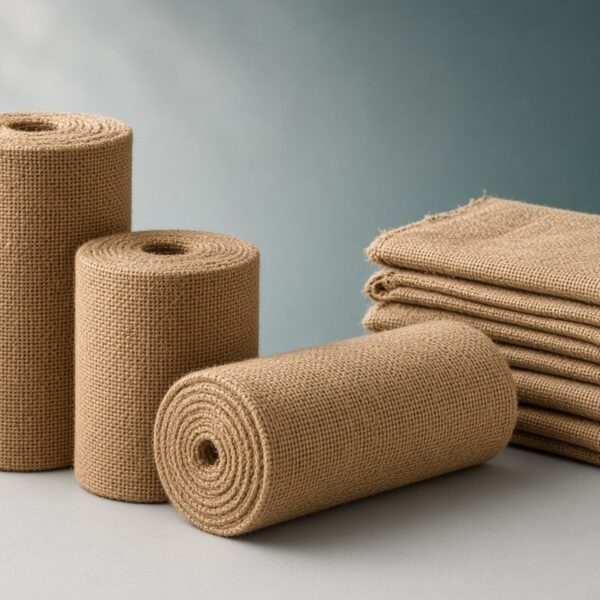
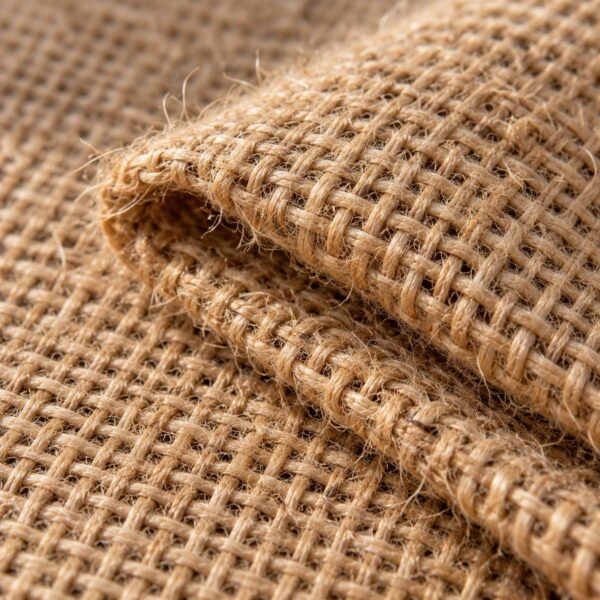
Hessian (Jute) Cloth
Natural jute hessian cloth in rolls and cut pieces, and bardana sacks, for grain, sugar and cotton packing – weight, width and sack size confirmed per order.
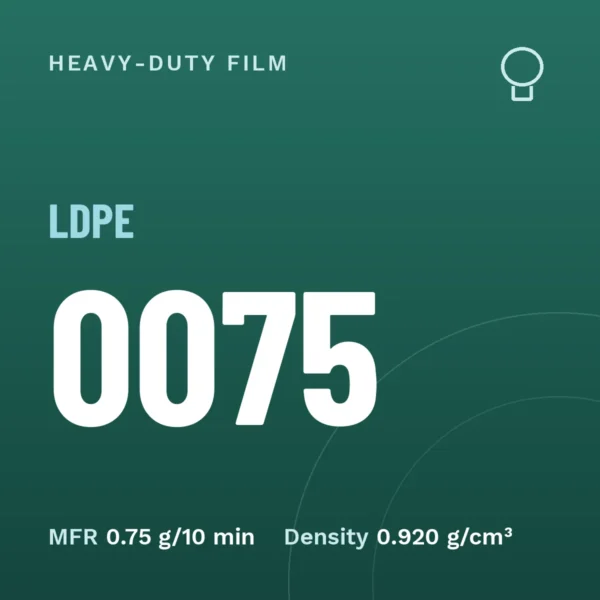
LDPE 0075 (LH0075) – Heavy-Duty Film Grade
LDPE 0075 (LH0075) is a low-MFR, high molecular weight LDPE for heavy-duty film, with strong dart impact, good yield strength and high stiffness.
- MFR 0.75 g/10 min 190 °C / 2.16 kg
- Density 0.920 g/cm³
- Process Heavy-duty film
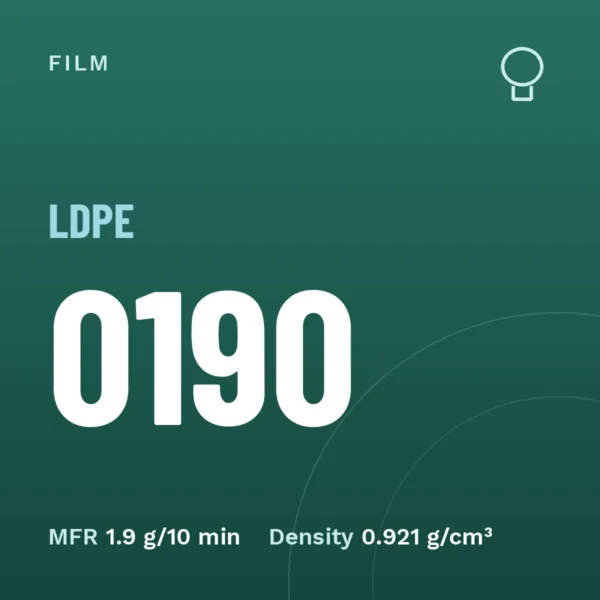
LDPE 0190 (LF0190) – Film Grade
LDPE 0190 (LF0190) is an additive-free, high molecular weight LDPE for general purpose and lamination film, with high output and good drawdown.
- MFR 1.9 g/10 min 190 °C / 2.16 kg
- Density 0.921 g/cm³
- Additives None
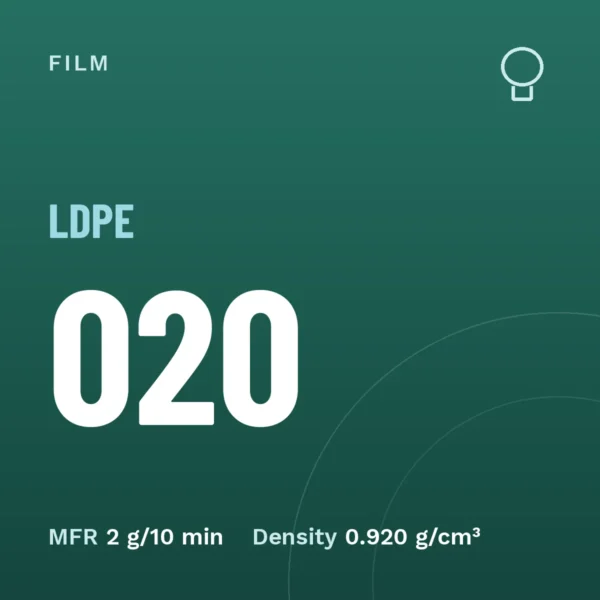
LDPE 020 (LF0200) – Film Grade
LDPE 020 (LF0200) is a high molecular weight low density polyethylene film grade with good extrusion behaviour, high dart impact and high stiffness.
- MFR 2 g/10 min 190 °C / 2.16 kg
- Density 0.920 g/cm³
- Process Blown film
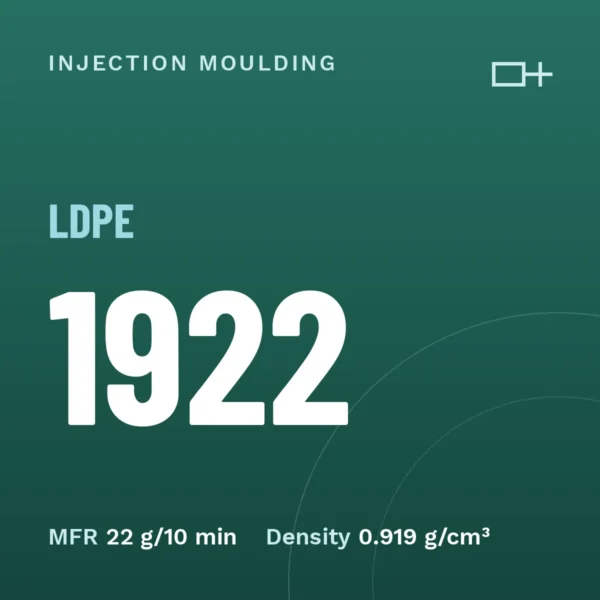
LDPE 1922 (1922T) – Injection Moulding Grade
LDPE 1922 (1922T) is a high-flow low density polyethylene injection grade with a good balance of flow and mechanical properties for toys, housewares and snap-on lids.
- MFR 22 g/10 min 190 °C / 2.16 kg
- Density 0.919 g/cm³
- Process Injection
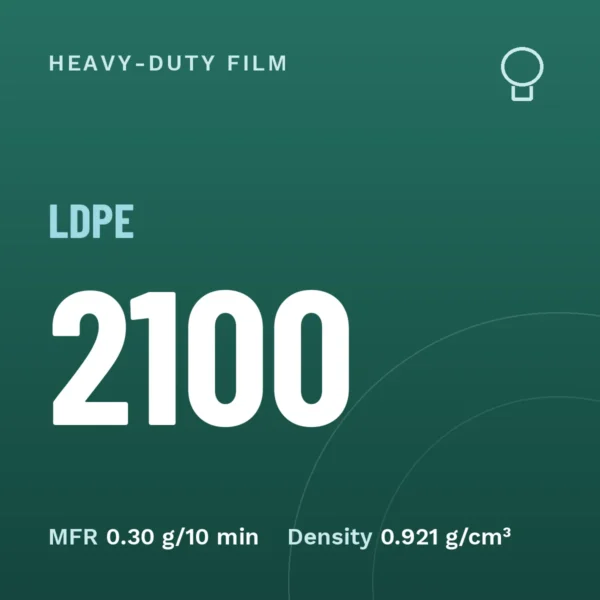
LDPE 2100 (2100TN00) – Heavy-Duty Film Grade
LDPE 2100 (2100TN00) is a low-MFR (0.3) low density polyethylene for heavy-duty film such as shrink hoods, industrial sacks and liners.
- MFR 0.30 g/10 min 190 °C / 2.16 kg
- Density 0.921 g/cm³
- Process Heavy-duty film
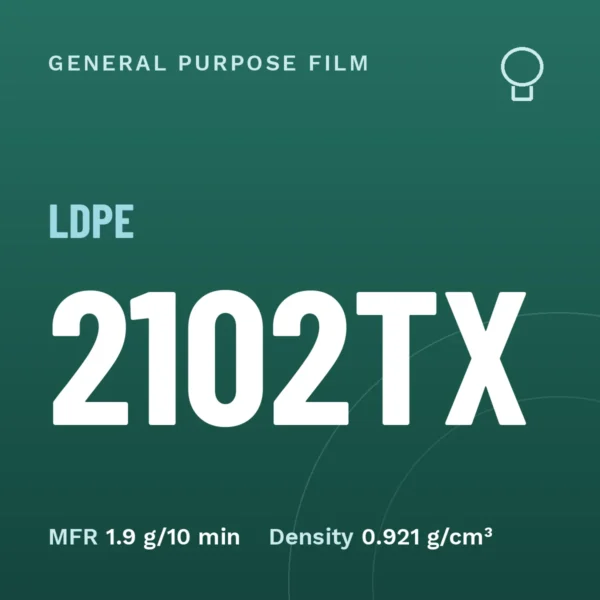
LDPE 2102TX – General Purpose Film Grade
LDPE 2102TX (2102TX00) is a general purpose low density polyethylene film grade for a wide range of film widths and thicknesses.
- MFR 1.9 g/10 min 190 °C / 2.16 kg
- Density 0.921 g/cm³
- Process Blown film
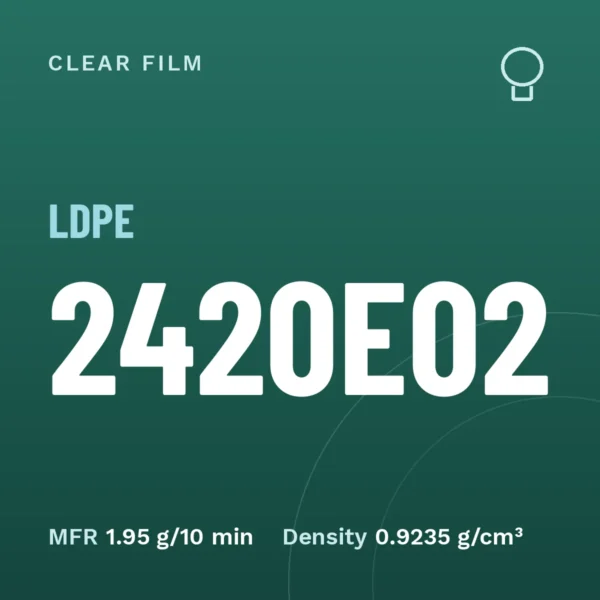
LDPE 2420E02 – Clear Film Grade
LDPE 2420E02 is a high-clarity, additive-free low density polyethylene for food packaging, lamination and fine shrink film.
- MFR 1.95 g/10 min 190 °C / 2.16 kg
- Density 0.9235 g/cm³
- Additives None
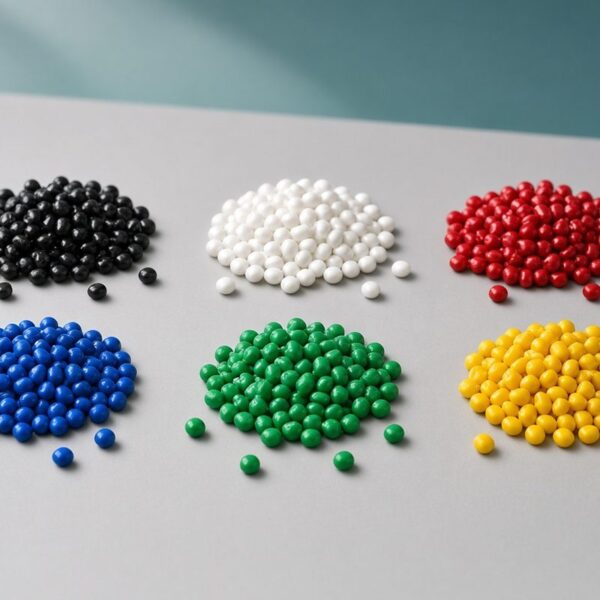
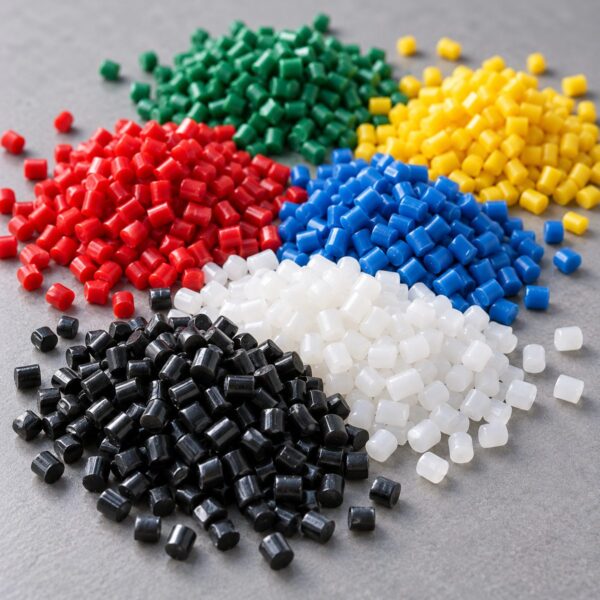
Masterbatch
Colour, white, black, calcium carbonate filler and additive masterbatch (UV, slip, anti-block, anti-static) from Iran – carrier and dosage matched to your polymer and process.
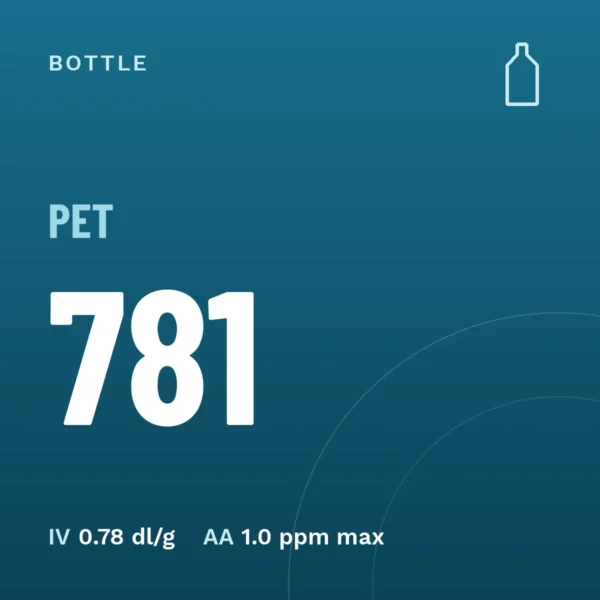
PET 781 (BG781) – Bottle Grade
PET 781 (BG781) is a bottle-grade PET resin with intrinsic viscosity 0.78 dl/g for water bottles, edible oil containers and small jars.
- IV 0.78 dl/g
- AA ≤ 1.0 ppm
- Process ISBM


