- Polyethylene (PE) Granules27 products
- Polypropylene (PP) Granules10 products
- Polystyrene (PS) Granules4 products
- Polycarbonate (PC) Granules2 products
- Polymer Compounds3 products
- ABS Granules2 products
 Masterbatch1 product
- PET Resin (Bottle Grade)3 products
- Textile & Packaging Products1 product
- Rabin Recycled & Compound Granules4 products



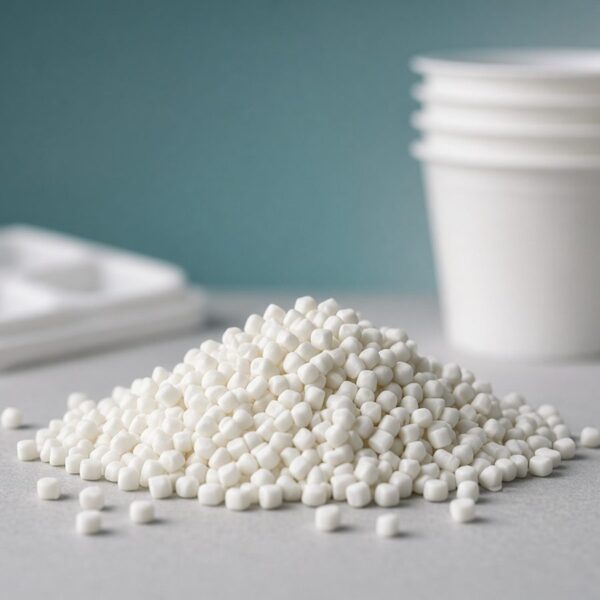
HIPS (high impact polystyrene) is a rubber-modified polystyrene with good impact resistance and easy thermoforming. It is widely used for refrigerator liners, dairy cups, trays, toys and appliance housings.
• HIPS 7240 – sheet extrusion and thermoforming grade.
Need a price? Send the grade, quantity and destination via WhatsApp +98 912 640 4020 or our enquiry form – we usually reply within one business day.
Karachi rate lists quote this material as PS HIPS. HIPS 7240 is prime, virgin dana in the producer’s 25 kg bags, with the rate given CFR Karachi or for road delivery via Taftan.
HIPS 7240 – Sheet & Thermoforming Grade
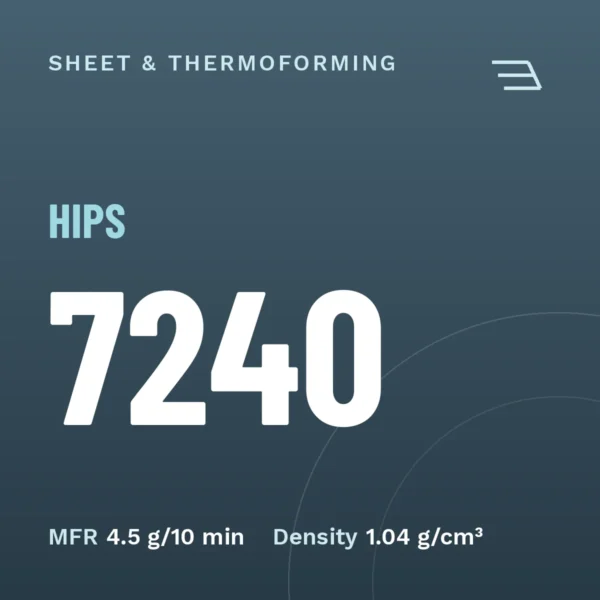
HIPS 7240 is a very high impact polystyrene for sheet extrusion and deep-draw thermoforming.
- MFR 4.5 g/10 min 200 °C / 5 kg
- Density 1.04 g/cm³
- Process Sheet Extrusion
HIPS 7240: high impact polystyrene for sheet and thermoforming
HIPS is polystyrene toughened with rubber particles. It loses the clarity of GPPS but gains a lot of impact strength, and it thermoforms very well. Common uses are yoghurt and dairy cups, refrigerator door and inner liners, food trays, vending cups and appliance housings.
| Grade | Melt flow | Density (g/cm³) | Best for | Datasheet |
|---|---|---|---|---|
| HIPS 7240 | MFI 4.5 200 °C / 5 kg | 1.04 | Dairy cups, trays, fridge liners | TDS PDF |
Why sheet makers choose 7240
- Good melt strength for even sheet thickness across the width.
- Deep draw: it forms deep cups without thin corners.
- Blendable: it mixes well with GPPS 1540 to tune stiffness and gloss.
Processing notes
- Extrude at 190 to 240 °C and cool the sheet evenly on the rolls.
- For refrigerator liners, ask about environmental stress-crack resistance against the foam and refrigerants used in your factory.
- Dry before use if the material has been stored in humid conditions.
HIPS or PP for cups?
HIPS forms faster and gives a crisp rim, and it is easy to print. PP handles heat and oil better. For chilled dairy products HIPS is the usual choice; for hot-fill or microwave use, look at the PP sheet grade.
Reading the HIPS datasheet
The melt flow of about 4.5 g/10 min at 200 °C and 5 kg is typical for sheet. Elongation around 60 percent and high impact strength show the effect of the rubber. Vicat softening temperature tells you the heat limit; like all polystyrene, HIPS is not for hot-fill.
Typical products in Pakistan
- Yoghurt, dessert and dairy cups
- Refrigerator inner and door liners
- Food and bakery trays
- Vending and disposable cups
- Appliance and electronics housings
Common thermoforming problems
- Thin corners: heat the sheet more evenly or use a plug assist.
- Cracked rims: add more HIPS to the blend or check sheet orientation.
- Blisters: moisture in the sheet; dry the granules before extrusion.
Ordering and delivery
Material leaves Iran in the producer’s original bags on pallets. Buyers in Pakistan can receive it by sea through Karachi or Port Qasim, or by road through Taftan. Route, packing and Incoterm are agreed order by order, because they depend on quantity, city and timing. Each shipment comes with a commercial invoice, packing list and certificate of origin.
For a rate, send the grade, the quantity and your city on WhatsApp or through the enquiry form. We reply within one business day.
Questions buyers ask
Can HIPS be used for injection moulding?
Yes. 7240 is optimised for sheet, but it also runs on injection machines for housings and trays.
What GPPS share should I use in a HIPS blend?
Start around 20 to 40 percent GPPS for stiffer, glossier sheet and test cups for breakage.


