



- Polyethylene (PE) Granules27 products
- Polypropylene (PP) Granules10 products
- Polystyrene (PS) Granules4 products
- Polycarbonate (PC) Granules2 products
- Polymer Compounds3 products
- ABS Granules2 products
Masterbatch1 product- PET Resin (Bottle Grade)3 products
- Textile & Packaging Products1 product
- Rabin Recycled & Compound Granules4 products
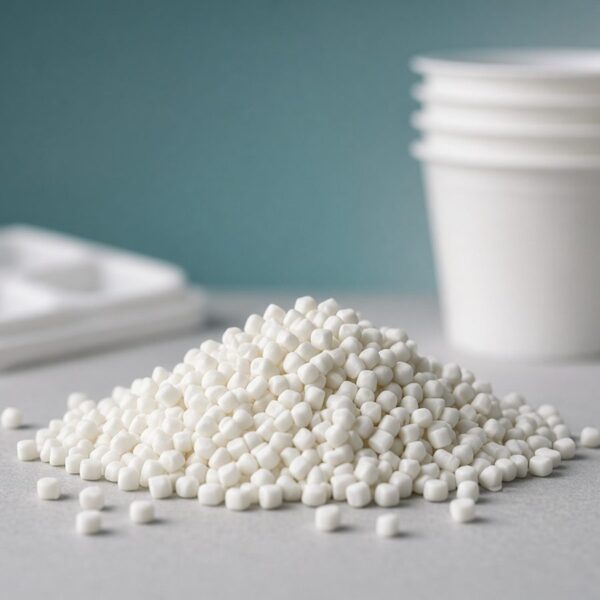
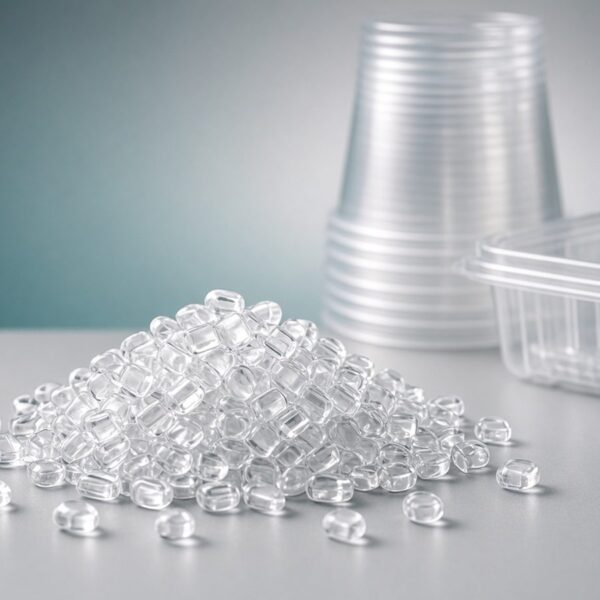
Polystyrene is a rigid, easy-to-mould amorphous thermoplastic. General purpose polystyrene (GPPS) is crystal-clear and stiff; high impact polystyrene (HIPS) is rubber-modified for toughness.
Available grades: GPPS 1540 and HIPS 7240.
Need a price? Send the grade, quantity and destination via WhatsApp +98 912 640 4020 or our enquiry form – we usually reply within one business day.
In Karachi rate lists polystyrene is quoted as PS GPPS and PS HIPS. Both grades are prime, virgin dana in original producer bags, with the rate given CFR Karachi.
Choose your process: GPPS HIPS
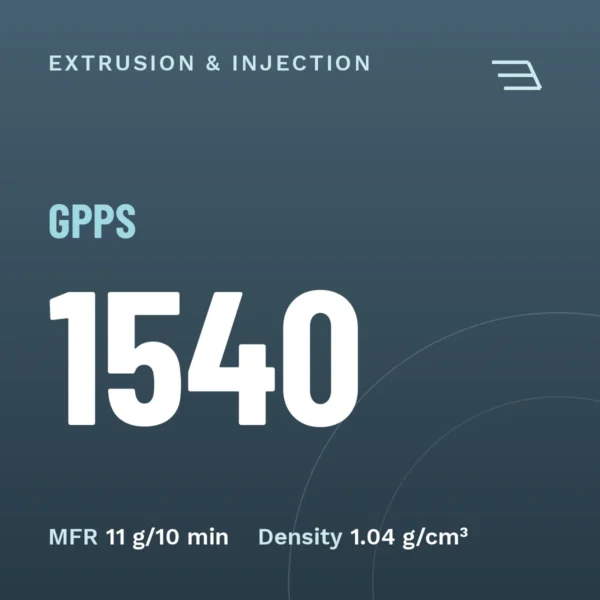
GPPS 1540 – Extrusion & Injection Grade
GPPS 1540 is an easy-flowing crystal polystyrene for extrusion and injection moulding.
- MFR 11 g/10 min 200 °C / 5 kg
- Density 1.04 g/cm³
- Process Extrusion / Injection
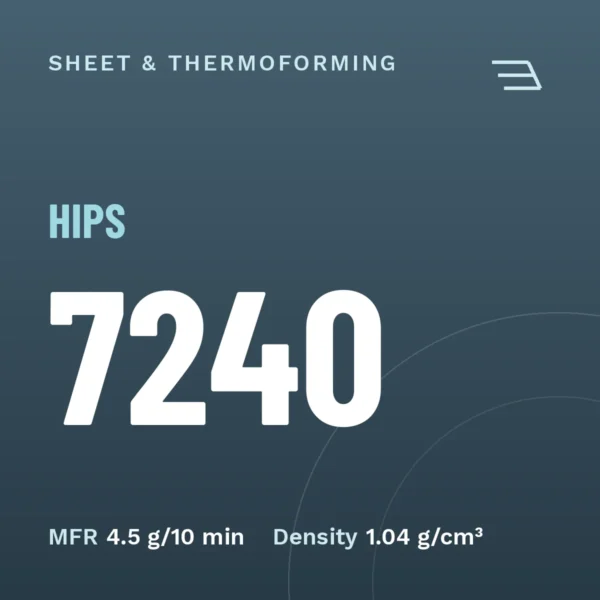
HIPS 7240 – Sheet & Thermoforming Grade
HIPS 7240 is a very high impact polystyrene for sheet extrusion and deep-draw thermoforming.
- MFR 4.5 g/10 min 200 °C / 5 kg
- Density 1.04 g/cm³
- Process Sheet Extrusion
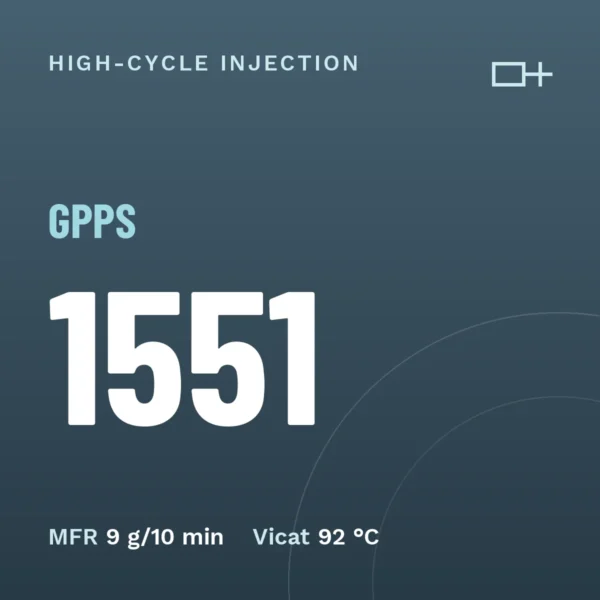
GPPS 1551 – High-Cycle Injection Grade
GPPS 1551 is a crystal-clear, high-strength general purpose polystyrene for fast-cycle injection moulding of thin-walled parts.
- MFR 9 g/10 min 200 °C / 5 kg
- Vicat 92 °C
- Process Injection
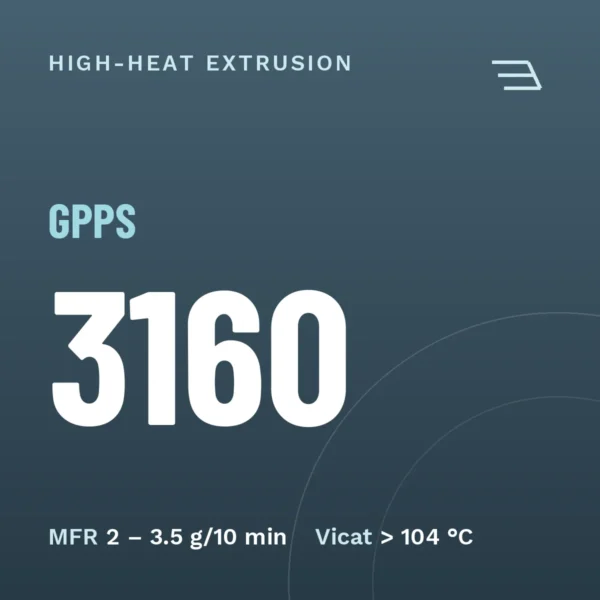
GPPS 3160 – High-Heat Extrusion Grade
GPPS 3160 is a high molecular weight, high-heat general purpose polystyrene for foam and clear sheet extrusion and medium-wall clear mouldings.
- MFR 2 – 3.5 g/10 min 200 °C / 5 kg
- Vicat > 104 °C
- Process Extrusion
Polystyrene granules: GPPS and HIPS
Polystyrene comes in two main forms. GPPS, general purpose polystyrene, is glass-clear and rigid. HIPS, high impact polystyrene, contains rubber, so it is white and opaque but much tougher. Pakistan has a local polystyrene producer, and imports fill gaps in specific grades and in volume. For converters, a second qualified source is useful when local supply is tight or a particular grade is needed.
Choose by type
| Grade | Melt flow | Density (g/cm³) | Best for | Datasheet |
|---|---|---|---|---|
| GPPS 1540 | MFI 11 200 °C / 5 kg | 1.04 | Clear disposables and packaging | TDS PDF |
| HIPS 7240 | MFI 4.5 200 °C / 5 kg | 1.04 | Thermoformed cups, trays, liners | TDS PDF |
Blending GPPS and HIPS
Many sheet lines blend the two. Adding GPPS to HIPS increases stiffness and gloss and speeds up thermoforming. Adding HIPS to GPPS reduces breakage. A common starting point for dairy cup sheet is 60 to 80 percent HIPS with the rest GPPS; the right ratio depends on wall thickness and how the cups are filled and sealed.
Handling tips
- Polystyrene picks up little moisture, but drying at about 70 °C for 2 to 4 hours prevents splay marks on clear parts.
- Keep regrind clean and sorted by type. Mixing HIPS into GPPS regrind ruins clarity.
- Polystyrene is attacked by many solvents and oils. Check compatibility before using it for oily foods.
Where polystyrene goes in Pakistan
- Disposable cups, plates and cutlery
- Dairy cups for yoghurt and desserts
- Refrigerator liners and appliance parts
- Clear cosmetic, pharmaceutical and food packaging
- Stationery, toys and household items
Reading a polystyrene datasheet
Melt flow is measured at 200 °C and 5 kg. Higher values flow more easily for thin injection parts; lower values give the melt strength needed for sheet. Vicat softening temperature tells you how much heat the part can take; polystyrene softens around 90 to 100 °C, so it is not for hot-fill.
Sourcing
Imported grades are useful when you need a specific flow or impact level, a second supplier during shortages, or a fixed grade for a long-running product. Send us the grade you use now and we will match it as closely as possible.
Ordering and delivery
Material leaves Iran in the producer’s original bags on pallets. Buyers in Pakistan can receive it by sea through Karachi or Port Qasim, or by road through Taftan. Route, packing and Incoterm are agreed order by order, because they depend on quantity, city and timing. Each shipment comes with a commercial invoice, packing list and certificate of origin.
For a rate, send the grade, the quantity and your city on WhatsApp or through the enquiry form. We reply within one business day.
Questions buyers ask
Is polystyrene food safe?
Both grades are used for food packaging. Ask for the food-contact statement for the lot you buy.
Do you supply EPS?
Not at the moment. Our polystyrene range is GPPS and HIPS for extrusion, injection and thermoforming.
Which grade is best for disposable cutlery?
GPPS for clear, rigid cutlery. Some makers add a little HIPS to reduce breakage.