- Polyethylene (PE) Granules27 products
- Polypropylene (PP) Granules10 products
- Polystyrene (PS) Granules4 products
- Polycarbonate (PC) Granules2 products
- Polymer Compounds3 products
- ABS Granules2 products
 Masterbatch1 product
- PET Resin (Bottle Grade)3 products
- Textile & Packaging Products1 product
- Rabin Recycled & Compound Granules4 products



PP raffia grades are homopolymers with low MFI for flat tape extrusion. They give high tenacity, good stretching and low fibrillation for woven sacks, FIBC (jumbo) bags, carpet backing and strapping.
• PP HP550J – raffia and film-yarn grade for woven bags and big bags.
Need a price? Send the grade, quantity and destination via WhatsApp +98 912 640 4020 or our enquiry form – we usually reply within one business day.
Karachi rate lists show this grade as Polypropylene Raffia, and you will also see PP Raffia and PP Rafia. HP550J is prime, virgin raffia dana for tape lines, with the rate given CFR Karachi.
PP HP550J – Raffia & Film Yarn Grade
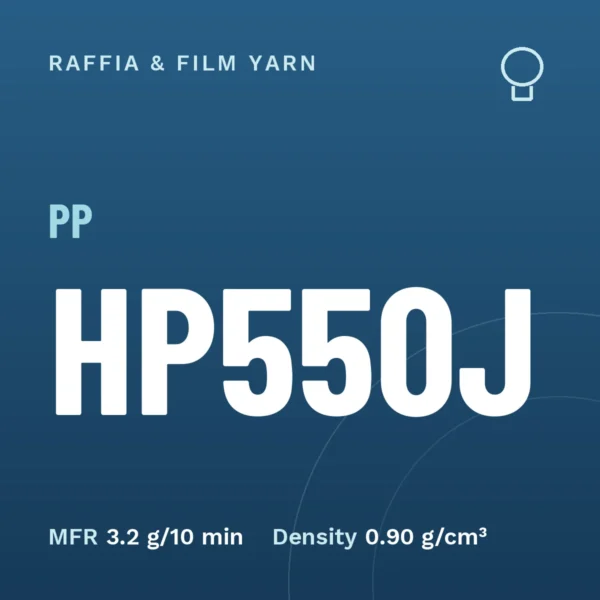
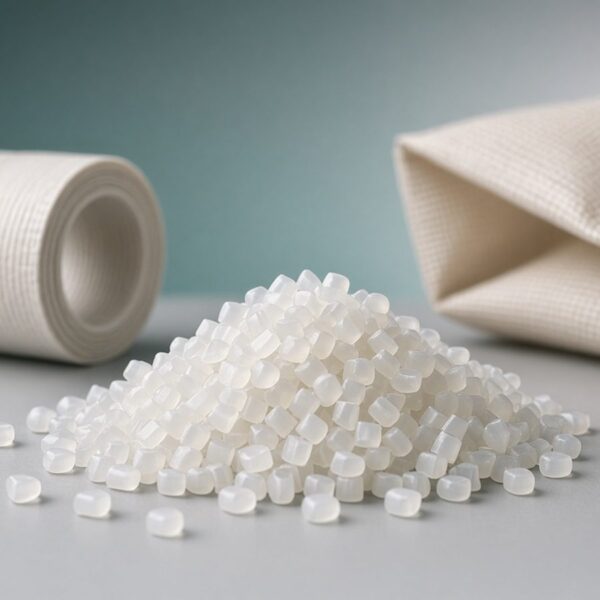
PP HP550J is a polypropylene homopolymer particularly suitable for film yarn (raffia), monofilament and sheet for thermoforming.
- MFR 3.2 g/10 min 230 °C / 2.16 kg
- Density 0.90 g/cm³
- Process Raffia / Tape
PP raffia grade for woven sacks
Raffia is the biggest single use of polypropylene in Pakistan. The tape made from it is woven into sacks for cement, fertiliser, flour, rice and sugar, and into FIBC jumbo bags. The scale is large: the cement industry dispatched more than 46 million tonnes in 2024-25, and urea production runs at about 6 million tonnes a year, most of it packed in 50 kg PP bags. Almost all the resin for these sacks is imported.
A raffia grade is a homopolymer with a melt flow close to 3 g/10 min. That is low enough for a strong, stable film before slitting and high enough to run at good line speed.
| Grade | Melt flow | Density (g/cm³) | Best for | Datasheet |
|---|---|---|---|---|
| PP HP550J | MFR 3.2 230 °C / 2.16 kg | 0.90 | Woven sacks, FIBC, strapping | TDS PDF |
What a good raffia grade does for you
- Stable tape width: even melt flow from lot to lot means fewer adjustments on the slitting line.
- High tenacity after stretching: sacks hold their drop-test strength with less tape weight.
- Low fibrillation: tapes split less during weaving and filling.
Recipe tips from tape lines
- Calcium carbonate filler masterbatch is common in Pakistani sacks. Keep it moderate, usually 5 to 15 percent, or tape strength drops fast.
- Add UV masterbatch for sacks that stand outside, such as cement on site or fertiliser in open yards.
- Typical melt temperature is 230 to 260 °C with a stretch ratio around 5 to 6.
Product page: PP HP550J. For fibre and filament, see PP fibre grade.
Where raffia goes in Pakistan
- Cement bags
- Fertiliser sacks (urea, DAP and others), usually 50 kg
- Flour, rice, sugar and animal-feed sacks
- FIBC jumbo bags for bulk materials and export
- Strapping, tarpaulin and woven fabric
Demand follows cement construction activity and the fertiliser seasons. Many sack plants keep a few weeks of resin in stock before the peak months.
Reading a raffia datasheet
Check melt flow at 230 °C and 2.16 kg; raffia grades are about 3. Look at tensile strength and flexural modulus, which show how strong and stiff the tape will be after stretching. A food-contact statement matters for flour, sugar and rice sacks.
Common tape-line problems
- Tape breaks during stretching: too much filler, wet filler masterbatch, or an uneven film thickness before slitting.
- Weak sacks in drop tests: check stretch ratio and tape weight; low-quality regrind is often the cause.
- Sacks degrading outdoors: add UV stabiliser masterbatch at the right dose.
Ordering and delivery
Material leaves Iran in the producer’s original bags on pallets. Buyers in Pakistan can receive it by sea through Karachi or Port Qasim, or by road through Taftan. Route, packing and Incoterm are agreed order by order, because they depend on quantity, city and timing. Each shipment comes with a commercial invoice, packing list and certificate of origin.
For a rate, send the grade, the quantity and your city on WhatsApp or through the enquiry form. We reply within one business day.
Questions buyers ask
Which MFR is right for cement bags?
Most tape lines making cement and fertiliser sacks run a homopolymer with MFR around 3. HP550J is in that range.
Can I mix raffia with recycled PP?
Many plants add some in-house reprocessed tape. Keep the share low and steady so tape strength stays predictable.
Is HP550J used for FIBC jumbo bags?
Yes. Raffia-grade homopolymer is used for the tape in FIBC fabric; the bag design and safety factor decide the tape weight.


