
- Polyethylene (PE) Granules27 products
- Polypropylene (PP) Granules10 products
- Polystyrene (PS) Granules4 products
- Polycarbonate (PC) Granules2 products
- Polymer Compounds3 products
- ABS Granules2 products
 Masterbatch1 product
- PET Resin (Bottle Grade)3 products
- Textile & Packaging Products1 product
- Rabin Recycled & Compound Granules4 products



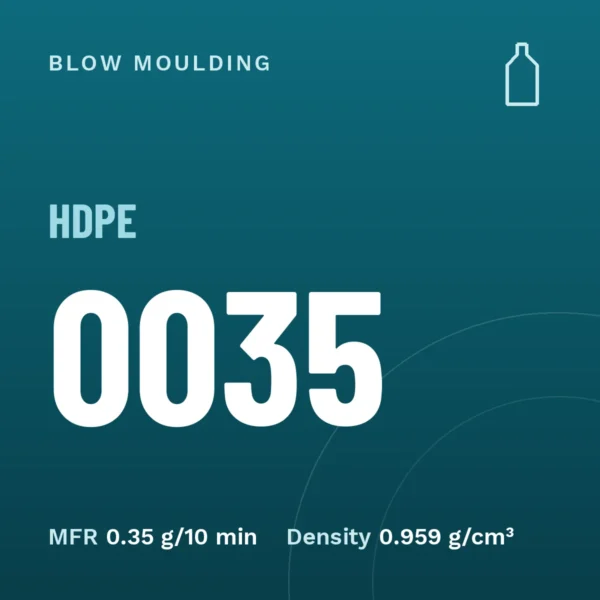
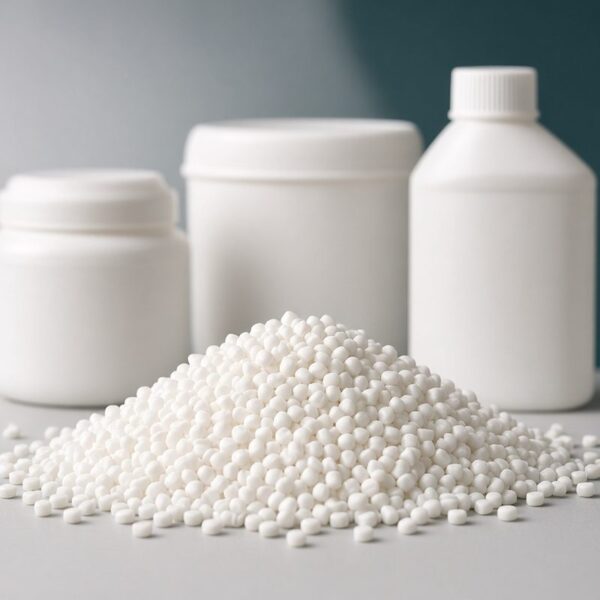
HDPE 0035 – Blow Moulding Grade
HDPE 0035 is a high-molecular-weight, highly crystalline blow moulding grade combining good extrusion behaviour with superior mechanical properties.
- MFR 0.35 g/10 min 190 °C / 2.16 kg
- Density 0.959 g/cm³
- Process Blow Moulding
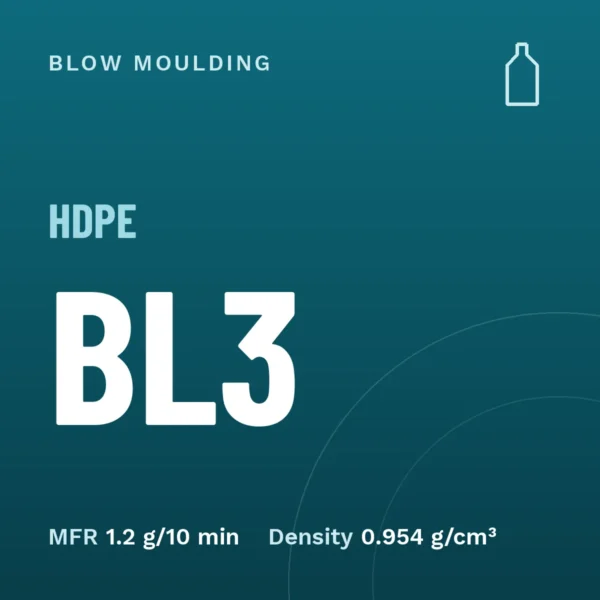
HDPE BL3 – Blow Moulding Grade
HDPE BL3 is a blow moulding grade with 1-butene comonomer for small containers up to 10 litres.
- MFR 1.2 g/10 min 190 °C / 5 kg
- Density 0.954 g/cm³
- Process Blow Moulding
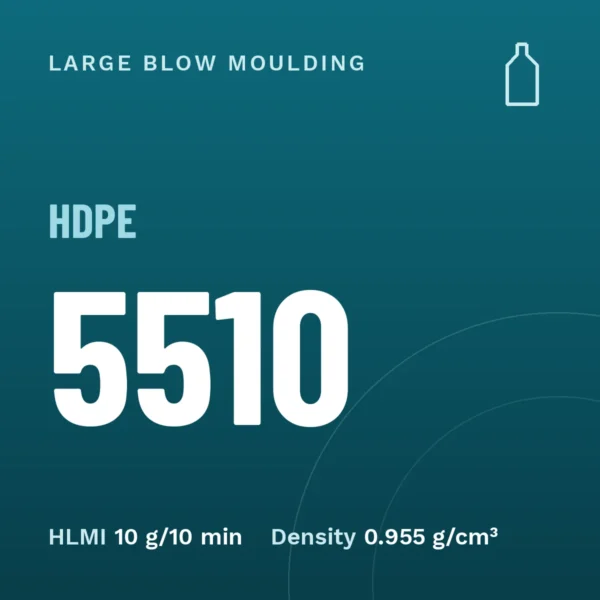
HDPE 5510 (HBM5510) – Large Blow Moulding Grade
HDPE 5510 (HBM5510) is a hexene-copolymer HDPE for large blow-moulded parts such as jerry cans and open-top drums, with high stiffness and good ESCR.
- HLMI 10 g/10 min 190 °C / 21.6 kg
- Density 0.955 g/cm³
- ESCR 90 h
HDPE blow moulding grade – buyer’s guide for Pakistan
Blow moulding grades are high-density polyethylenes with low melt flow and high melt strength, so the parison does not sag before the mould closes. Karachi rate lists quote them as HDPE Blow Moulding. Pakistani converters use them for detergent and shampoo bottles, edible-oil and lubricant containers, jerrycans and drums.
Compare HDPE blow moulding grades
| Grade | Iranian producers | Melt flow | Density (g/cm³) | Best for | Datasheet |
|---|---|---|---|---|---|
| HDPE BL3 | Jam, Marun, Kermanshah | 1.2 190 °C / 5 kg | 0.954 | Bottles up to 5 L – detergent, cosmetics, medicine | TDS PDF |
| HDPE 0035 | Bandar Imam | 0.35 190 °C / 2.16 kg | 0.959 | Jerrycans, drums and large containers | TDS PDF |
How to choose
- Container size: BL3 is designed for small and medium bottles up to about 5 litres; for 10–220 L jerrycans and drums choose a lower-flow, higher-melt-strength grade such as 0035.
- Stress-crack resistance: detergents and oils attack HDPE; check the ESCR value on the datasheet when packing aggressive liquids.
- Stiffness and top-load: higher density gives a stiffer bottle that stacks better on pallets.
Typical applications in Pakistan
- Detergent, shampoo and cosmetic bottles
- Edible-oil and ghee containers
- Lubricant and motor-oil bottles
- Agrochemical containers
- Jerrycans and industrial drums
Processing tips
- Typical melt temperature 180–220 °C; lower temperatures improve melt strength for large parisons.
- Use parison programming for even wall thickness on handles and corners.
- Regrind can be added in moderate amounts; keep it clean and dry.
Market overview
Blow moulding in Pakistan is closely tied to FMCG: detergents, shampoos, cooking oil and lubricants. Big brands buy from established bottle makers who need consistent melt strength and stress-crack resistance, while jerrycan and drum makers serve agriculture, chemicals and edible-oil traders. Seasonal demand for edible oil and agrochemicals affects container orders during the year.
Common blow moulding problems
- Parison sag on large parts: choose a lower-flow, higher-melt-strength grade or reduce melt temperature.
- Stress cracking with detergents: use a grade with good ESCR and avoid sharp corners in the bottle design.
- Uneven wall thickness: use parison programming and check die centring.
- Weak pinch-off: adjust mould closing speed and pinch geometry.
Grade notes
HDPE BL3 – HDPE BL3 is a blow moulding grade with 1-butene comonomer. High rigidity and an excellent balance of stiffness and environmental stress-crack resistance make it ideal for detergent and medicine bottles and all bottles and small containers below 5 litres. Key strengths: high density & stiffness, good flow & impact strength, good stress-crack resistance. In Pakistan it is used for detergent, shampoo, edible-oil and medicine bottles up to 5 litres.
HDPE 0035 – HDPE 0035 is a high-molecular-weight, highly crystalline blow moulding grade combining good extrusion behaviour with superior mechanical properties. Blow-moulded items show high stiffness, high impact strength even at low temperature, good stress-crack and excellent chemical resistance. Key strengths: high stiffness, high impact, also when cold, excellent chemical resistance. In Pakistan it is used for jerrycans, drums and large blow-moulded containers.
Supply to Pakistan
We ship HDPE blow moulding grade from Iran in 25 kg bags on pallets (jumbo bags on request). Sea freight goes in 20′ and 40′ containers from Bandar Abbas to Karachi or Port Qasim; inland buyers can also receive trucks via Taftan. The shipping mode, route and Incoterm are agreed for each order, depending on quantity, destination and timing. Every shipment travels with a commercial invoice, packing list, certificate of origin and the producer datasheet.
Need a rate? Send the grade, quantity and city on WhatsApp or use the enquiry form – we reply within one business day. You can also join our free weekly rate list for Pakistan.
Frequently asked questions
Which HDPE grade is best for 1–5 litre bottles?
BL3 is designed for bottles up to about 5 litres and offers good stiffness, flow and stress-crack resistance.
Which grade is used for jerrycans and drums?
A lower melt flow grade with high melt strength such as 0035 is used for large containers from 10 L upwards.
Who produces BL3 and 0035 in Iran?
BL3 (HF4760) is produced by Jam, Marun and Kermanshah (Bakhtar); 0035 (HB0035) by Bandar Imam Petrochemical. The producer is confirmed per lot.
Are these grades suitable for food contact?
Several lots are produced as food-contact grades. Ask us for the producer’s food-contact statement for your specific lot.


