- Polyethylene (PE) Granules27 products
- Polypropylene (PP) Granules10 products
- Polystyrene (PS) Granules4 products
- Polycarbonate (PC) Granules2 products
- Polymer Compounds3 products
- ABS Granules2 products
 Masterbatch1 product
- PET Resin (Bottle Grade)3 products
- Textile & Packaging Products1 product
- Rabin Recycled & Compound Granules4 products



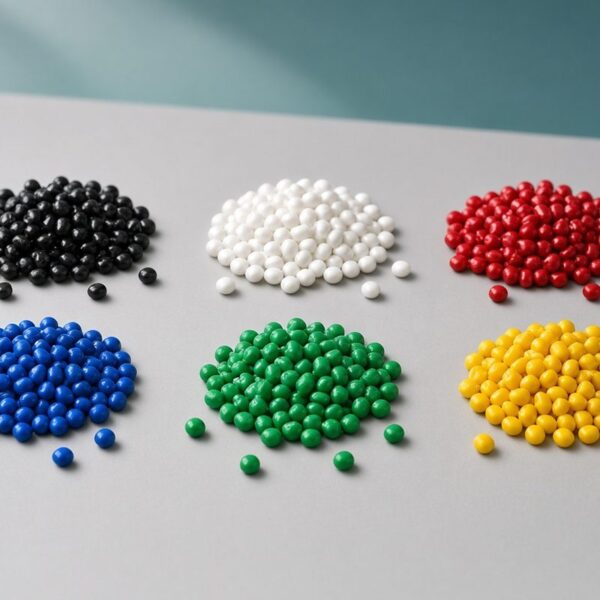
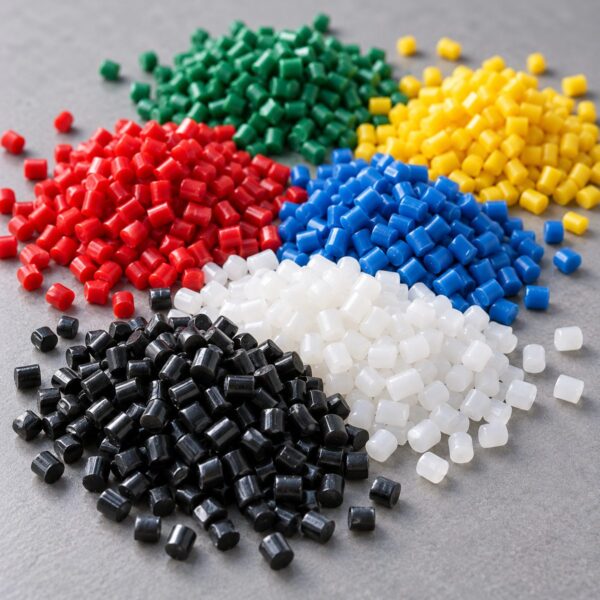
Masterbatch is a concentrated blend of pigments or additives in a carrier resin, dosed at 1–5% to colour plastics or to add functions such as UV stability, anti-block, slip or filler. Rabin Polymer supplies black, white, colour, filler (CaCO3) and additive masterbatch for film, pipe, injection moulding and fibre.
• Masterbatch – black, white, colour and additive masterbatch; carrier and loading according to your process.
Need a price? Send the grade, quantity and destination via WhatsApp +98 912 640 4020 or our enquiry form – we usually reply within one business day.
In Pakistan, calcium carbonate filler masterbatch is usually called calpet. We supply black, white and colour masterbatch, calpet and UV masterbatch for woven sacks and film, to be added to prime, virgin dana at the machine. Rates are given CFR Karachi.
Masterbatch
Colour, white, black, calcium carbonate filler and additive masterbatch (UV, slip, anti-block, anti-static) from Iran – carrier and dosage matched to your polymer and process.
Masterbatch: colour and additives for your own resin
Masterbatch is a concentrate of pigment, filler or additive in a polymer carrier, supplied as granules. The converter mixes a few percent into natural resin at the hopper. It is how most Pakistani film, injection and sack plants colour their products and add UV protection or slip, without stocking several pre-coloured resins.
Main types
- Black: carbon black for colour and UV protection in pipe, film and injection parts.
- White: titanium dioxide for opaque bags, bottles and housewares.
- Colour: matched to a sample, RAL or Pantone reference.
- Filler: calcium carbonate to reduce cost and add stiffness, common in woven sacks and carry bags.
- Additives: UV, slip, anti-block, antistatic, antioxidant, anti-fog, flame retardant, clarifier and purge.
Pick the right carrier
The carrier should match, or at least be compatible with, the resin you are colouring: PE carriers for polyethylene film and pipe, PP carriers for raffia, fibre and PP injection. A wrong carrier shows up as streaks, specks or a weak product. Carriers such as LDPE, LLDPE, HDPE, PP, PS and EVA are available depending on the formula.
Dosing in practice
- Colour masterbatch is usually added at 1 to 3 percent; white at 2 to 5 percent.
- For PE100 pipe, the finished pipe needs 2.0 to 2.5 percent carbon black, so the masterbatch dose depends on its black content.
- Filler masterbatch ranges widely, often 5 to 30 percent. In raffia tape keep it on the low side.
- Use a gravimetric doser if you can. Volumetric dosing drifts as granule size changes.
Masterbatch can be loaded in the same container as your PE or PP granules. Product page: masterbatch.
Where masterbatch goes in Pakistan
- White and colour masterbatch for carry bags and packaging film
- Black masterbatch for pipe, garbage bags and injection parts
- Filler masterbatch for woven sacks and carry bags
- UV masterbatch for sacks, agricultural film and outdoor furniture
- Slip and anti-block for packaging film
Quality points
- Dispersion: check a pressed film or a filter test for specks and streaks.
- Moisture: filler masterbatch must be dry, or it causes bubbles and tape breaks.
- Heat stability: the pigment must survive your processing temperature, especially for PP fibre and PC.
- Colour: compare under daylight and shop lighting, with the same resin and thickness as the final product.
Ordering and delivery
Material leaves Iran in the producer’s original bags on pallets. Buyers in Pakistan can receive it by sea through Karachi or Port Qasim, or by road through Taftan. Route, packing and Incoterm are agreed order by order, because they depend on quantity, city and timing. Each shipment comes with a commercial invoice, packing list and certificate of origin.
For a rate, send the grade, the quantity and your city on WhatsApp or through the enquiry form. We reply within one business day.
Questions buyers ask
Can you match our colour?
Yes. Send a sample, the RAL or Pantone code and the resin you use.
What is the minimum quantity?
It depends on the type. Standard black and white are easiest; custom colours need a minimum batch. Ask us with your monthly volume.
Can masterbatch be shipped with granules?
Yes. It can be loaded in the same container as your PE or PP order.


