Recycled PE Granules: 7 Quality Checks Before You Buy a Lot

Recycled polyethylene granules (recycled dana) can lower the cost of film, sacks and moulded goods, but two lots that look the same in the bag can behave very differently on the line. A lot that runs well on a garbage-bag extruder can cause holes in thin film or short shots in a mould. This guide covers the seven checks that matter most, how to test them, and what to ask your supplier before you order.
How recycled granules are made
Collected scrap is sorted, ground into flakes, washed and dried, then melted in an extruder, passed through a melt filter and cut into granules. The quality of the lot depends on each step: how clean and uniform the scrap was, how well it was washed and dried, and how fine the melt filter was. Post-industrial scrap (edge trim, off-cuts, rejected rolls) is usually cleaner and more uniform than post-consumer waste.
1. Feedstock: what polymer is in the lot
A recycled PE lot can contain some polypropylene or other polymers. PP does not mix with PE, so it shows up as weak spots, gels and poor weld lines. Ask whether the lot is mainly LDPE/LLDPE film scrap, HDPE, or a mix, and whether it is post-industrial or post-consumer. Our Recycle Danah granules are mainly PE and sometimes PP, and every lot is described before sale.
2. Moisture
Granules that are not fully dried cause bubbles, streaks and holes, especially in thin film. A simple heating test or a moisture analyser shows the level. If you store granules in a humid warehouse, keep bags closed and use a hopper dryer for film work.
3. Melt flow (MFR) and its spread
Melt flow rate tells you how easily the material flows. For film you generally need a low MFR, for injection moulding a higher one. With recycled material, the spread between lots matters as much as the average value: a lot that swings widely forces constant changes to temperature and screw speed. Ask for the MFR of the lot you will receive, not a general figure.
4. Gels and contamination
Gels, black specks and unmelted particles come from contamination, degraded polymer or a coarse melt filter. Blow a short test film or press a thin plaque and look at it against the light. For thin film, gels are often the deciding factor.
5. Ash and filler content
Some scrap already contains calcium carbonate filler. A high ash content raises density, lowers tear and impact strength and can wear the screw. An ash test (burning a weighed sample) shows how much filler is in the lot.
6. Colour and odour
Colour limits what you can make: natural or light lots can be coloured with masterbatch, dark mixed lots are best for black products. A strong odour usually points to poor washing or overheating, and can carry into the finished product.
7. Consistency and traceability
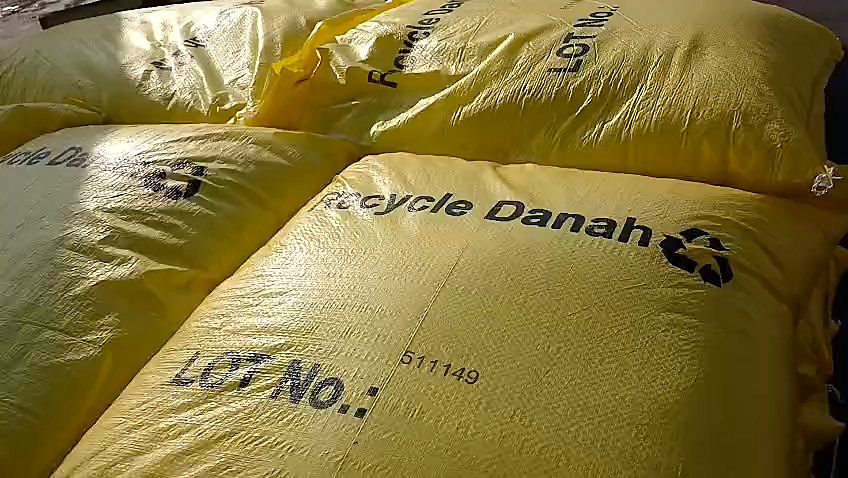
Each bag should carry a lot number so that you can trace a problem back to its lot. Our RP Recycled Granules and Recycle Danah are packed in 25 kg bags with the number, lot and weight printed on every bag.
Quick tests you can run
| Test | What it shows | How |
|---|---|---|
| Melt flow (MFR) | Flow and processing window | MFR tester, compare with the lot sheet |
| Moisture | Risk of bubbles and holes | Moisture analyser or heat test |
| Ash | Filler content | Weigh, burn and weigh again |
| Test film or plaque | Gels, specks, colour | Short trial on your line |
| Density | Polymer type and filler | Density column or water displacement |
Using recycled granules with prime resin
Many converters blend recycled granules with prime polyethylene to keep cost down while protecting film strength. Start a trial with a small share of recycled material and increase it while you watch strength, gels and line speed. For demanding films, keep the recycled share in non-critical products or layers.
What to ask before you order
- The lot number and the measured values of that lot (MFR, density, moisture, ash)
- The feedstock: film scrap, HDPE, post-industrial or post-consumer
- Photos of the granules and of the bags
- The packing: 25 kg bags or jumbo bags, and the number per truck
Send the product you make and the quantity on WhatsApp +971 58 687 5544, and we reply with the lots available and their values. Our recycled granules are made at our own plant in Eyvanaki Industrial Zone, Semnan province; see our recycled and compound granules.


