Blog
Masterbatch vs Pigment Powder: Which Should a Plastics Plant Use?

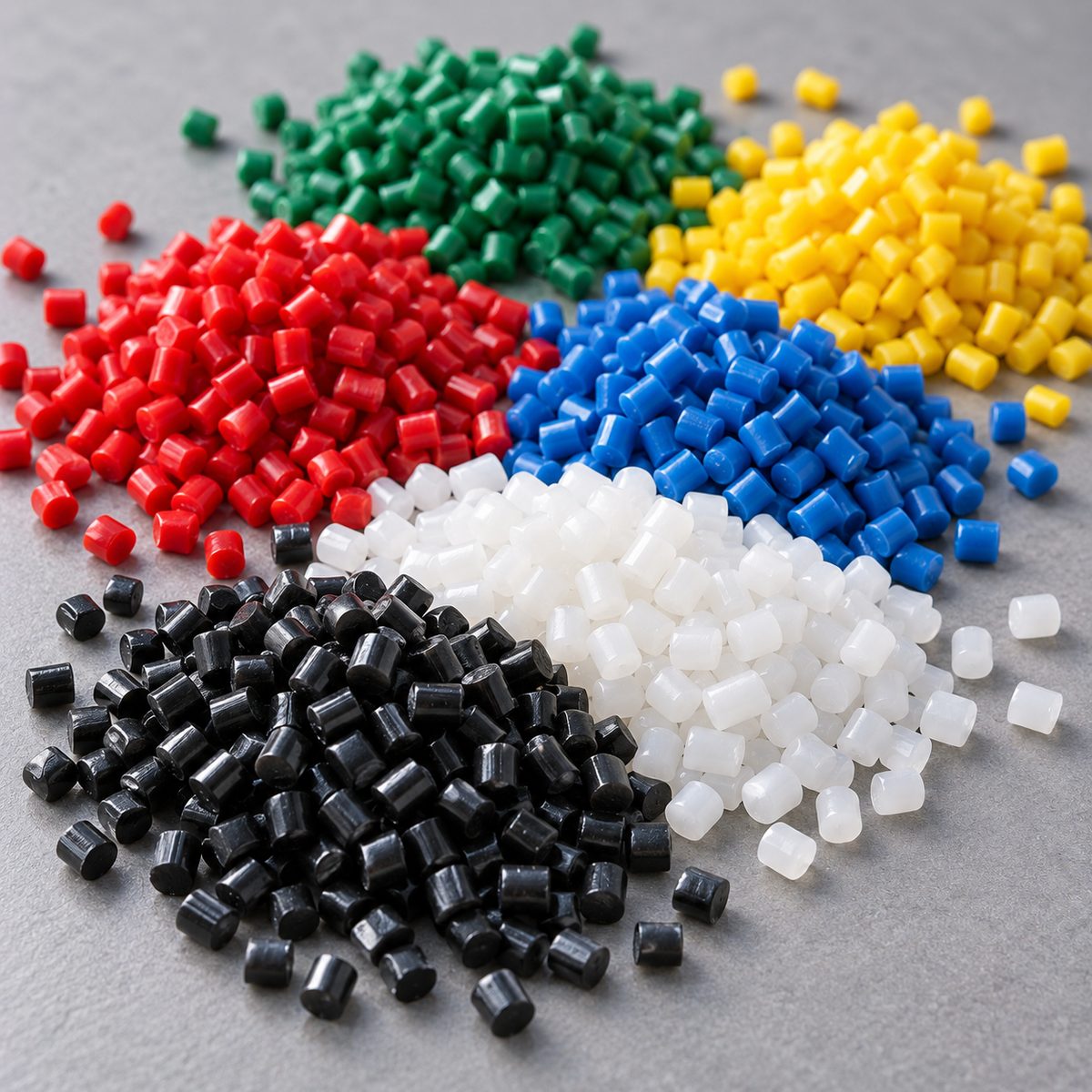
Almost every coloured plastic part or film is coloured with pigment, but most plants do not add the pigment as a powder. They use masterbatch: a concentrate of pigment or additive already dispersed in a polymer carrier and cut into granules. This guide explains the difference, the main types of masterbatch, and what to tell your supplier.
Pigments and dyes
Colourants fall into two groups. Dyes dissolve in the material they colour; pigments do not dissolve but stay as very fine particles spread through it. Polyolefins such as PE and PP are coloured almost entirely with pigments. Inorganic pigments such as titanium dioxide (white), carbon black and iron oxides are strong, opaque and heat-stable; organic pigments give brighter, cleaner colours and are used for most reds, blues, yellows and greens.
Why plants avoid pigment powder
- Dust and cleaning: powder spreads through the plant and contaminates the next colour.
- Dispersion: pigment particles stick together; without a high-shear mixer they leave streaks and specks, and in film they can cause holes.
- Dosing: very small amounts of powder are hard to dose evenly into granules, so colour varies from batch to batch.
- Health and safety: fine powder in the air needs extraction and protective equipment.
What masterbatch is
In masterbatch the pigment or additive is already dispersed in a carrier resin, usually PE or PP, and supplied as granules. You mix it with the natural resin at a set ratio (the let-down ratio) and feed it to the extruder or injection machine like any other granule. Dispersion is done once, at the masterbatch plant, under controlled conditions.
Types of masterbatch
| Type | What it does | Typical use |
|---|---|---|
| Colour | Gives a specific shade | Household goods, caps, crates, coloured film |
| White | Opacity and whiteness, usually titanium dioxide | Milk and detergent bottles, white film |
| Black | Carbon black for colour and UV protection | Pipes, agricultural film, garbage bags |
| Filler (calcium carbonate) | Replaces part of the resin to lower cost and add stiffness | Woven sacks, shopping bags, injection parts |
| Additive | UV stabiliser, slip, anti-block, antistatic, processing aids | Greenhouse film, packaging film, technical parts |
Our masterbatch range covers colour, white, black, calcium carbonate filler and additive types, made at our plant in Eyvanaki Industrial Zone.
How much to add
The dose depends on the pigment loading of the masterbatch, the wall or film thickness and how opaque the product must be. Colour masterbatch is usually added at a few percent; filler masterbatch at much higher levels. Run a short trial at the recommended ratio, check the colour against your standard, and adjust in small steps.
Choosing the carrier
The carrier must be compatible with your resin and melt at your processing temperature. A PE carrier suits PE film and moulding; for PP, check with the supplier whether a PE-based or PP-based carrier is recommended for your product. For food-contact packaging, ask for confirmation that the pigments and carrier are suitable.
What to send your supplier
- The resin and grade you use, for example HDPE F7000 film or PP HP550J raffia
- The process: blown film, injection, blow moulding, sheet or raffia
- The colour reference: a sample, RAL or Pantone code, or a photo of the target product
- The planned let-down ratio and the product thickness
- Any additives you need, such as UV protection for outdoor use
Send these details on WhatsApp +971 58 687 5544 and we reply with a suggestion and a rate within one business day.


