Blog
HDPE, LDPE or LLDPE: Choosing a Polyethylene Grade for Blown Film

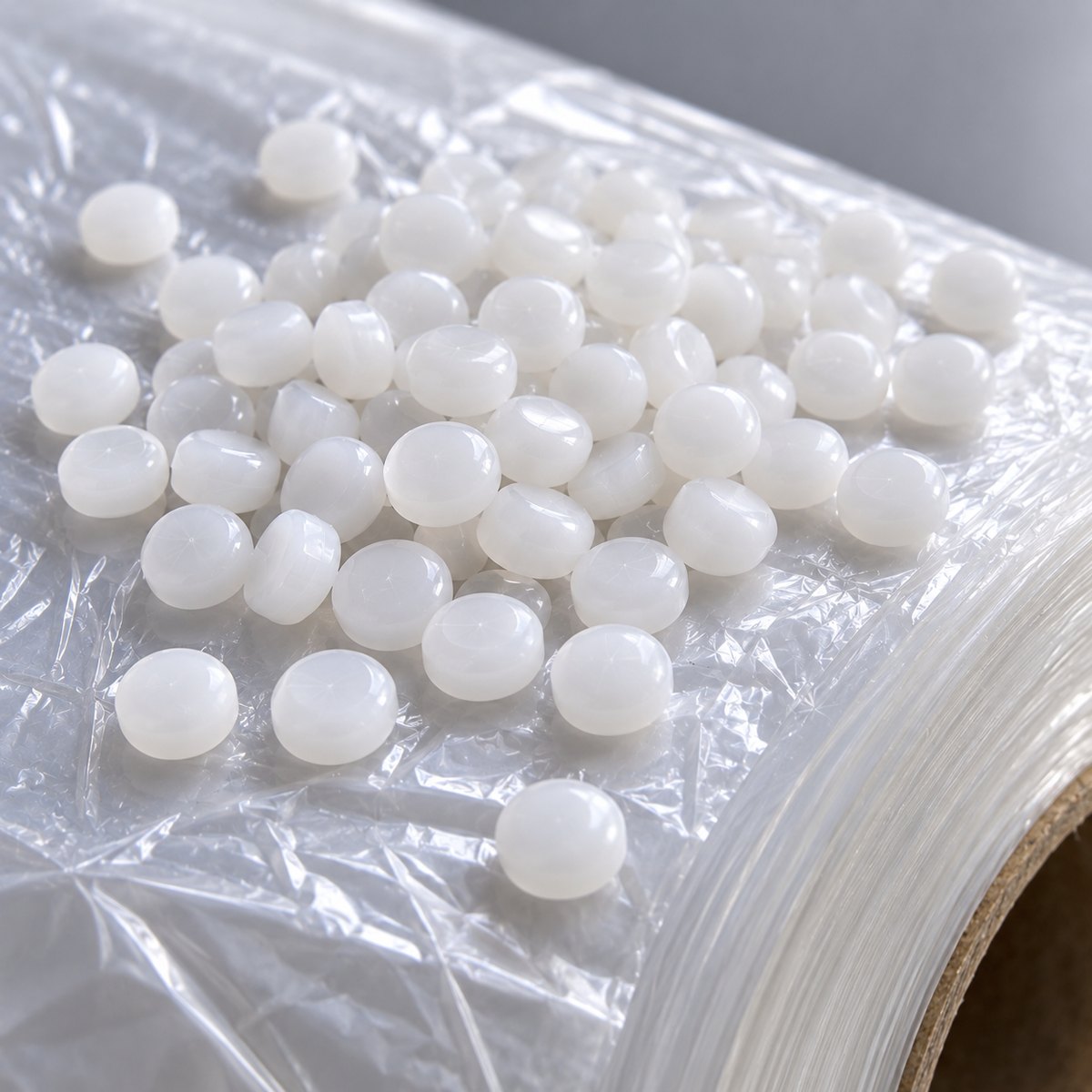
Blown film is the largest single use of polyethylene, and the three main types, HDPE, LDPE and LLDPE, each bring something different to the film. Most plants run blends, so knowing what each one contributes helps you choose the right grade, fix problems on the line and compare offers. This guide uses the grades we supply as examples.
Two numbers that describe a film grade
- Density (g/cm³): higher density means a stiffer film with a better moisture barrier and less clarity. HDPE is about 0.94–0.96, LDPE and LLDPE about 0.91–0.93.
- Melt flow rate, MFR (g/10 min): a lower MFR means longer polymer chains, a stronger film and a more stable bubble, but more motor load. Always compare MFR at the same test condition; HDPE film grades are often quoted at 5 kg instead of 2.16 kg.
HDPE film grades
HDPE makes thin, stiff, rustling film with high tensile strength: T-shirt and shopping bags, garbage bags, liners and thin packaging. High-molecular-weight HDPE film grades let you go very thin without losing strength.
- HDPE F7000: developed for very thin, high-strength films; MFR 0.04 g/10 min (190 °C / 2.16 kg), density 0.952 g/cm³.
- HDPE EX5: bimodal, high-molecular-weight film grade with butene comonomer; MFR 0.28 g/10 min (190 °C / 5 kg), density 0.949 g/cm³.
- HDPE 5110: another HDPE film grade in our range; ask for the datasheet for your line.
LDPE film grades
LDPE has long branches on its chains. That gives good clarity, easy processing and a stable bubble, but lower tensile and puncture strength than LLDPE. It is used for packaging film, lamination, shrink film and as the easy-processing part of blends.
- LDPE 2119: excellent optical properties for general-purpose thin film; MFR 1.9, density 0.921.
- LDPE 0190: additive-free, for general-purpose and lamination film with high output; MFR 1.9, density 0.921.
- LDPE 2102TX: general-purpose film grade for a wide range of widths and thicknesses.
- LDPE 0075: low MFR (0.75) for heavy-duty film with strong dart impact.
- LDPE 2420H, 2420E02, 020 and 2100: further film grades for packaging, shrink and heavy-duty sacks.
LLDPE film grades
LLDPE has short, regular branches. It gives tougher film with better puncture and tear resistance and good stretch, which makes it the base for stretch film, agricultural film and strong packaging. On its own it is harder to process than LDPE, so it is often blended.
- LLDPE 209: butene-based film grade for packaging and agricultural film.
- LLDPE 22B02: butene comonomer with high stiffness; MFR 2.0, density 0.922, for blown and cast film.
Side-by-side comparison
| HDPE | LDPE | LLDPE | |
|---|---|---|---|
| Density (g/cm³) | 0.94–0.96 | 0.91–0.93 | 0.91–0.93 |
| Stiffness | High | Low | Medium |
| Clarity | Low (hazy) | High | Medium |
| Tear and puncture | Good in thin gauges | Lower | High |
| Processing | Needs high-stalk bubble | Easiest | Higher motor load |
| Typical film | Shopping bags, liners | Packaging, shrink, lamination | Stretch, agricultural, heavy packaging |
Common blends
- LLDPE + LDPE: the most common blend; LDPE improves bubble stability and clarity, LLDPE adds toughness. Used for agricultural, packaging and shrink film.
- HDPE + LLDPE: adds tear and impact resistance to thin HDPE bags.
- Recycled + prime: lowers cost in garbage bags and sacks; see our guide to checking recycled PE granules.
How to choose
- Start from the film: thickness, strength, clarity and what it will carry.
- Match the main polymer: HDPE for thin and stiff, LDPE for clarity and easy running, LLDPE for toughness and stretch.
- Check MFR and density against your line and die.
- Run a trial with the blend you plan to use.
All our film grades are listed under polyethylene granules, each with a datasheet. To get a rate, send the grade, quantity and destination on WhatsApp +971 58 687 5544.


