




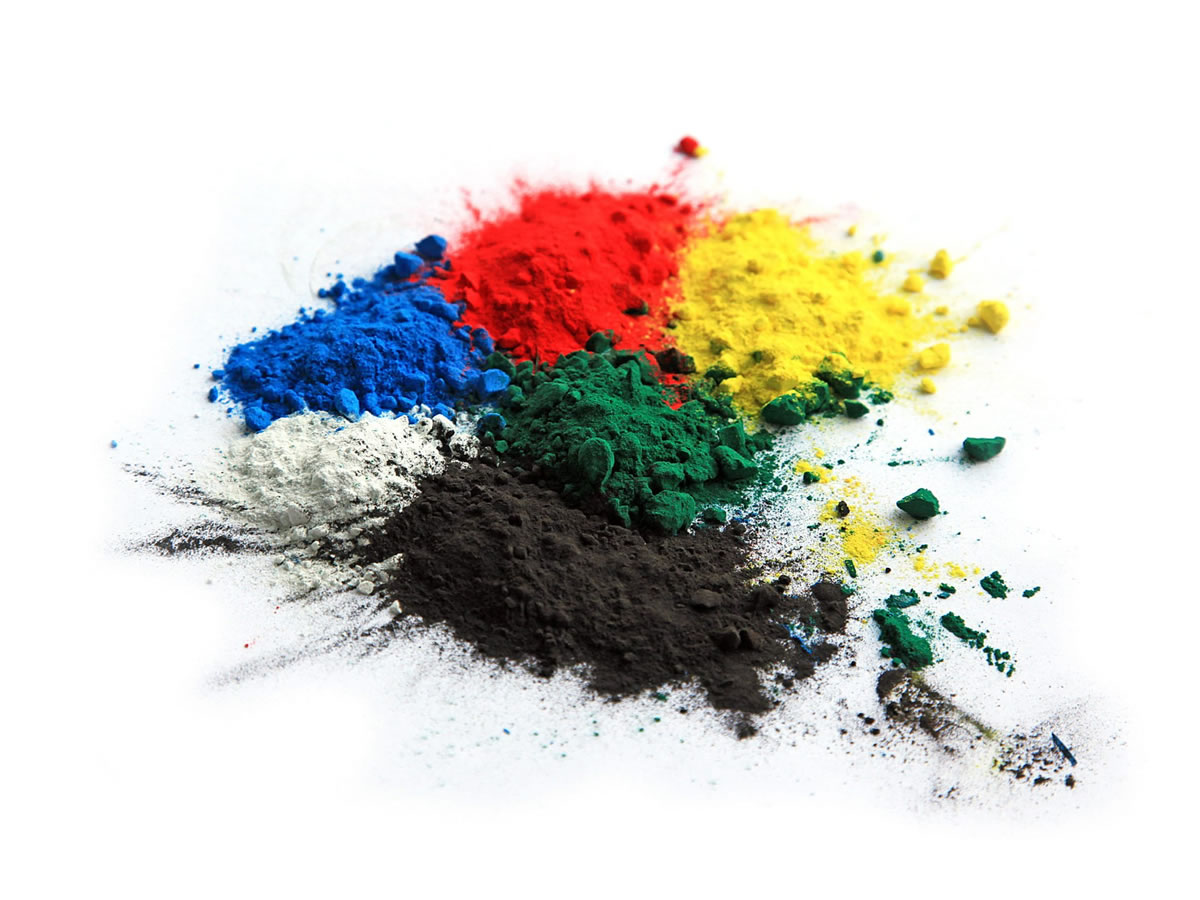
Pigments, one of the main substances in the color industry
Color materials consist of two main categories of materials: dyes and pigments; pigments are one of the most important materials in the color industry, and due to their specific characteristics, they are widely used in various forms. The difference between dyes and pigments is that dyes dissolve in the target substance. However, pigments only affect the surface of objects and are not dissolved or absorbed in the target substance. In the following article, while introducing pigments and explaining their types, we will also examine the prominent features of these materials. We will address some of the essential uses of pigments.
Introduction to pigments and their role in the color industry
Pigments or dyes are among the main actors in the color industry. These decorative solid materials come in various shapes and sizes. Dyes are insoluble in water and only color the surface of the desired substance without being absorbed. Pigments have high color durability and stability, one of their most desirable characteristics.
Different pigments can absorb specific wavelengths and change the color of the reflected light from the surface of the substance. However, this does not mean that pigments have fluorescent or phosphorescent properties. The use of pigments in the industry is extensive; these materials are used in producing varnishes, oil paints, cellulose paints, plastic paints, iron and metal structures, coloring vehicles, and more. This extensive use has made the role of pigments so important.
Types of pigments
Natural pigments (mineral):
This category of pigments is extracted from mines and the earth’s crust through mineral processes. After extraction, the mineral materials are crushed and ground. Then, they are graded for size, and the desired pigments are introduced into the production cycle.
Synthetic pigments (industrial):
These pigments are produced through chemical processes rather than being obtained through mineral processes. This type of pigment is created in industrial laboratories by combining other mineral materials. Synthetic pigments are very similar to natural pigments in terms of chemical structure. However, the better crystalline form and higher purity of chemical pigments make them superior to natural pigments.
Organic pigments:
Organic pigments have a wide range of applications and are used more than mineral pigments. Organic pigments have noticeable brightness and luminosity, and bright colors can be produced using them. However, the resistance of mineral pigments to radiation, heat, and corrosion is greater than that of organic pigments.
Comparison of organic and mineral pigments
Corrosion resistance:
Mineral pigments have a much higher corrosion resistance. All mineral pigments have anti-corrosion properties, but organic pigments do not. Heat resistance: Organic pigments are stable at high temperatures but degrade or melt at low temperatures. Mineral pigments also show good stability at low temperatures. Brightness and transparency: Organic pigments are the first choice for producing bright, transparent, and shiny colors. They have a complete advantage over mineral pigments in this respect.
Production of black and white colors:
Titanium dioxide and carbon produce white and black colors, respectively. Both of these pigments are considered to be mineral pigments. Resistance to light: Mineral pigments show better resistance to destructive light and radiation compared to organic pigments. The reason for this is the chemical bonds of mineral pigments, which have higher resistance and tolerance to radiation, especially ultraviolet rays.
Pigment characteristics
Despite their diverse nature, pigments share many common characteristics. Prominent characteristics that should be considered for their selection and use include:
- Resistance to heat (especially in mineral pigments)
- Resistance to acidic and basic materials
- Resistance and tolerance to radiation (especially in mineral pigments)
- Variety in color ranges
- Chemical nature
- Crystalline molecular structure
- Dispersion capacity
- Particle shape and dimensions and their distribution
Pigment application
Pigments are among the most important materials for coloring and the paint industry. Today, pigments have various uses and applications. For example, they cover and color metal, iron, and wooden surfaces, especially for coloring vehicles and bulky equipment. The protective and resistant properties of pigments, along with their wide range of colors, contribute to this. Using pigments protects metal, wooden parts, and vehicles from various chemical compounds, moisture, heat, and harmful rays such as ultraviolet light.
Additionally, pigments have various applications in the production of colored granules, varnishes, and oil and plastic paints. Other uses of pigments include inks, paper coloring, and iron fittings.
Conclusion
Two groups of materials that play a critical role in the industry of paint and dyeing are colors and pigments. Pigments have a wide application in the paint industry due to their prominent properties, as these materials have good resistance and can increase the product’s resistance to damaging factors while enhancing its beauty. Pigments are classified into mineral, artificial, and organic types. The most important features of pigments that should be considered in their selection for product production are their chemical nature and particle composition, crystalline structure, and resistance to various damaging factors.
For information about Perk Pet Hot Wash and purchasing granules, visit the Robin Polymer website. Robin Polymer production company has been operating since 2017 in line with its general policy of providing high-quality products in the field of various polyethylene, body, PP, and HDPE granules for the production of many pipes, wide nylons, handle nylons, and the production of car parts and plastic parts, with modern machinery and high-quality control and purity control laboratories, starting its activities with the best quality according to international standards.
To purchase various polymer products, granules, and perks, take action now through the Robin Polymer website.